Updated October 2026
Short answer
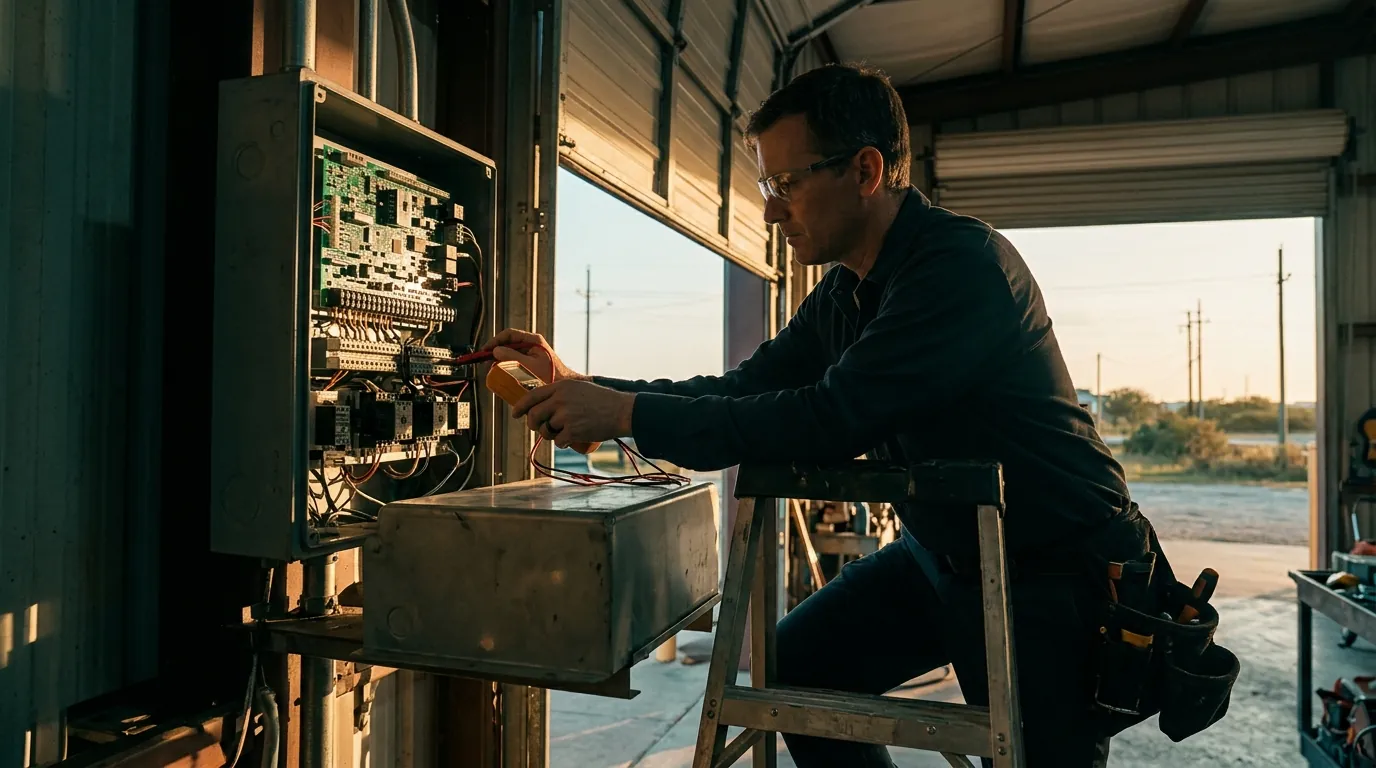
A commercial door operator in Houston usually fails in its limit switches, its control board, a safety edge or photo eye, or the motor's brake or contactor. Most faults show up as a door that will not move, reverses, or stops partway, and testing each part in order finds the cause quickly.
Signs an operator needs repair
The door stops short or overruns
Limit switches have drifted.
It reverses for no reason
Safety edge or photo eyes.
It hums but will not move
Brake, contactor or motor fault.
Buttons work only sometimes
Station or wiring fault.
It runs hot or smells
The motor or gearbox is struggling.
How an operator repair runs
Make the door safe
Door secured and power isolated.
Test the controls
Stations, wiring, timers and interlocks.
Test the operator
Limits, brake, motor and drive.
Test safety devices
Photo eyes and reversing edge.
Repair and verify
Parts replaced, settings made, full cycles run.
How commercial operators differ
Commercial operators are built for heavy doors and many cycles. They come as trolley operators that run along a rail like residential openers, jackshaft operators that mount beside the door and turn the shaft, and hoist operators for rolling steel doors. Many run on three-phase power and use three-button control stations, timers and interlocks with dock equipment.
Safety devices matter more on commercial doors, because people and vehicles share the opening. Photo eyes, reversing edges and light curtains all feed the operator's controls.
Trolley and jackshaft operators
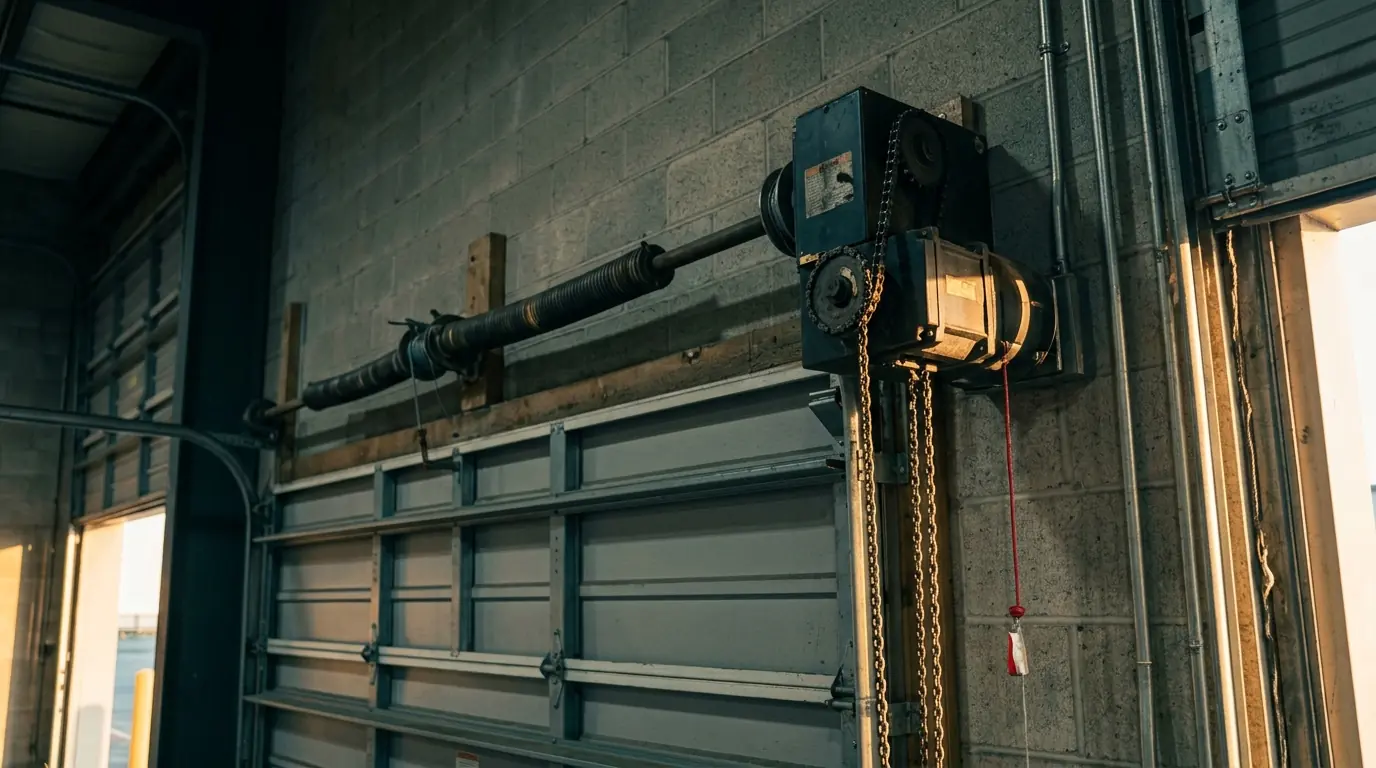
Trolley operators pull the door along a ceiling rail and suit standard-lift sectional doors with clear ceiling space. Jackshaft operators mount on the wall beside the door and turn the torsion shaft, which suits high-lift, vertical-lift and rolling doors and keeps the ceiling clear for cranes and racking. Repairs on both cover motors, gearboxes, brakes, drive chains and limit switches, which drift out of adjustment over time and cause doors to stop short or overrun. We also check the brake, which holds heavy doors in place.
Three-button control stations
Most commercial doors use an open, close and stop station, sometimes with a key switch, a timer to close, or interlocks with a dock leveler. Worn buttons, damaged wiring and failed control boards all show up as a door that ignores commands or behaves inconsistently. We trace the controls from station to operator, replace failed stations or boards, and set timers and interlocks so the door works the way your staff expect. Stations exposed to forklifts can be moved or fitted with guards.
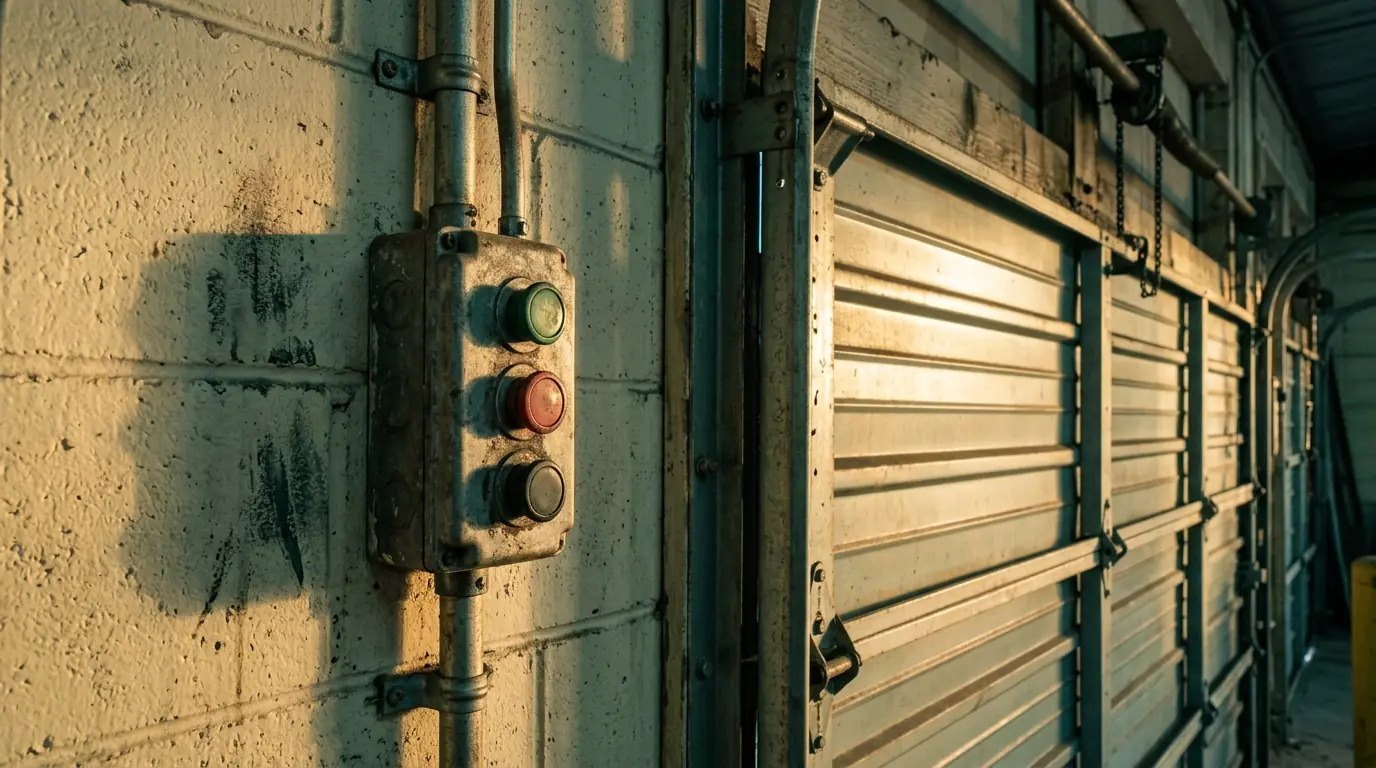
Photo eyes and reversing edges
Commercial doors use photo eyes across the opening and a reversing edge on the bottom of the door, a pressure or electric strip that stops and reverses the door when it touches something. A damaged edge or misaligned eye can stop the door from closing at all, or worse, stop it from reversing. We test both, repair or replace them, and never leave a door with its safety devices bypassed, even temporarily. We also check that the edge cord and its coil cable are intact.
Operators on northwest Houston industrial doors
Industrial buildings near our Theall Rd office are built around 16 by 16 foot overhead doors for service, distribution and contractor tenants, and doors that size are almost always run by commercial operators rather than residential openers. Busy tenants cycle them all day, so limit drift, worn brakes and damaged reversing edges are the operator faults we see most on the northwest side.
Brands we service and install
We repair operators from LiftMaster and the commercial operator lines used on Overhead Door, Raynor, Wayne Dalton and Cornell doors.
What drives the cost of an operator repair
Operator repairs are priced by the part that failed and the operator's size.
- 1
Fault. Limit adjustment costs less than a board or motor.
- 2
Operator size and power. Three-phase, heavy-duty units cost more to repair.
- 3
Safety devices. Edges and photo eyes are priced separately.
- 4
Parts availability. Older operators may need parts ordered.
- 5
Replacement. Very old or obsolete operators may be better replaced.
Questions about this job
Commercial operator questions
Usually limit switches, a safety device trip or a control fault.
A sensing strip on the bottom of the door that stops and reverses it when it touches something.
Yes, along with single-phase commercial operators.
Yes, where it suits the door and the safety devices are in place.
If parts are unavailable or it fails repeatedly, replacement is often better value.
Yes, including interlocks with dock levelers.