Updated October 2026
Short answer
Rolling fire doors in Houston buildings are expected to be inspected and drop-tested at least once a year under NFPA 80, the standard for fire doors. The test confirms the door closes on its own, at the right speed and fully, then the door is reset and the result recorded.
What a drop test checks
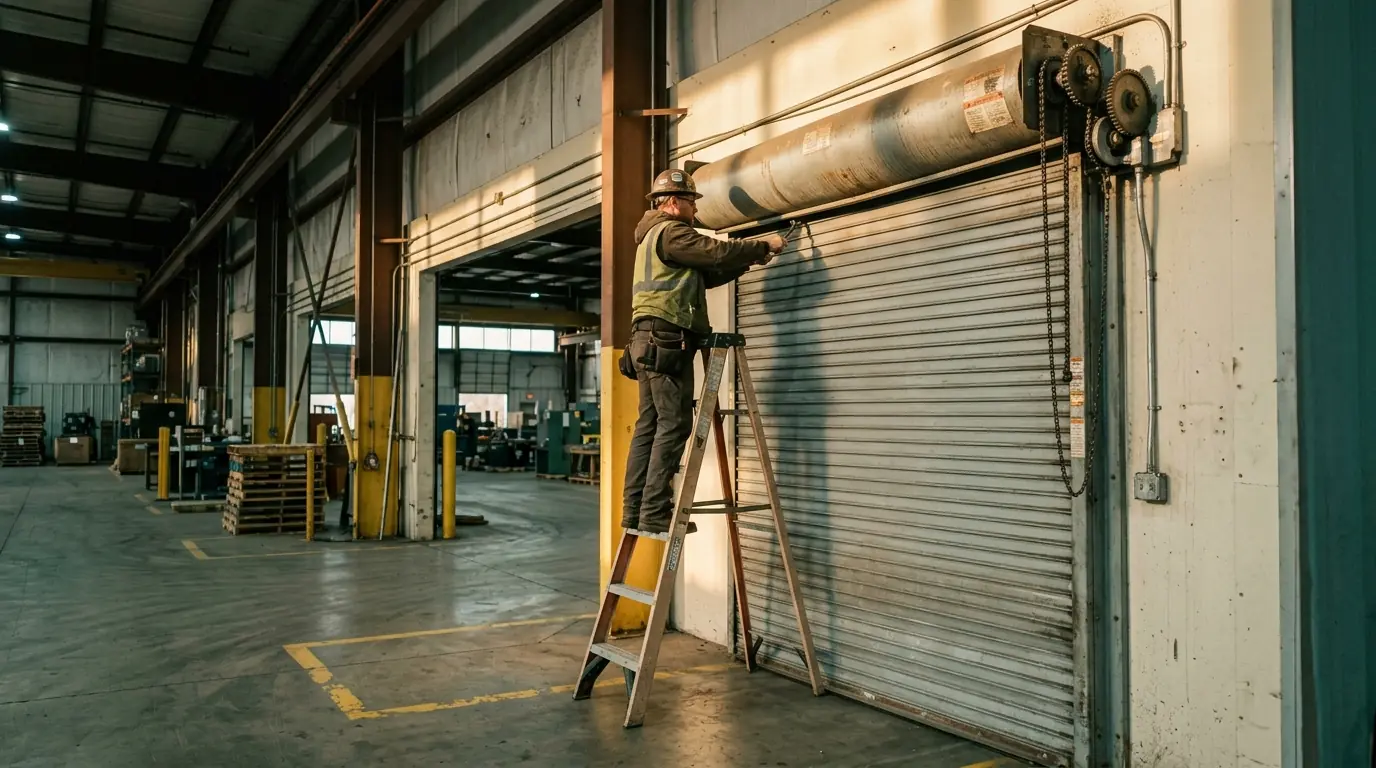
A rolling fire door stays open on a release device, usually held by fusible links that melt at a set temperature or a release triggered by the fire alarm. When it releases, a governor controls the closing speed so the door comes down fully without slamming.
A drop test simulates that release. We trigger the door, watch it close, time it, check that it seats fully, then reset it to the open position. Doors that fail are repaired and retested.
What every drop test covers
- Door label and rating checked
- Release mechanism and fusible links
- Full release and automatic closing
- Closing speed within the maker's range
- Bottom bar seating
- Guides, curtain and barrel condition
- Reset to the open position
- Written record for each door
Annual drop test
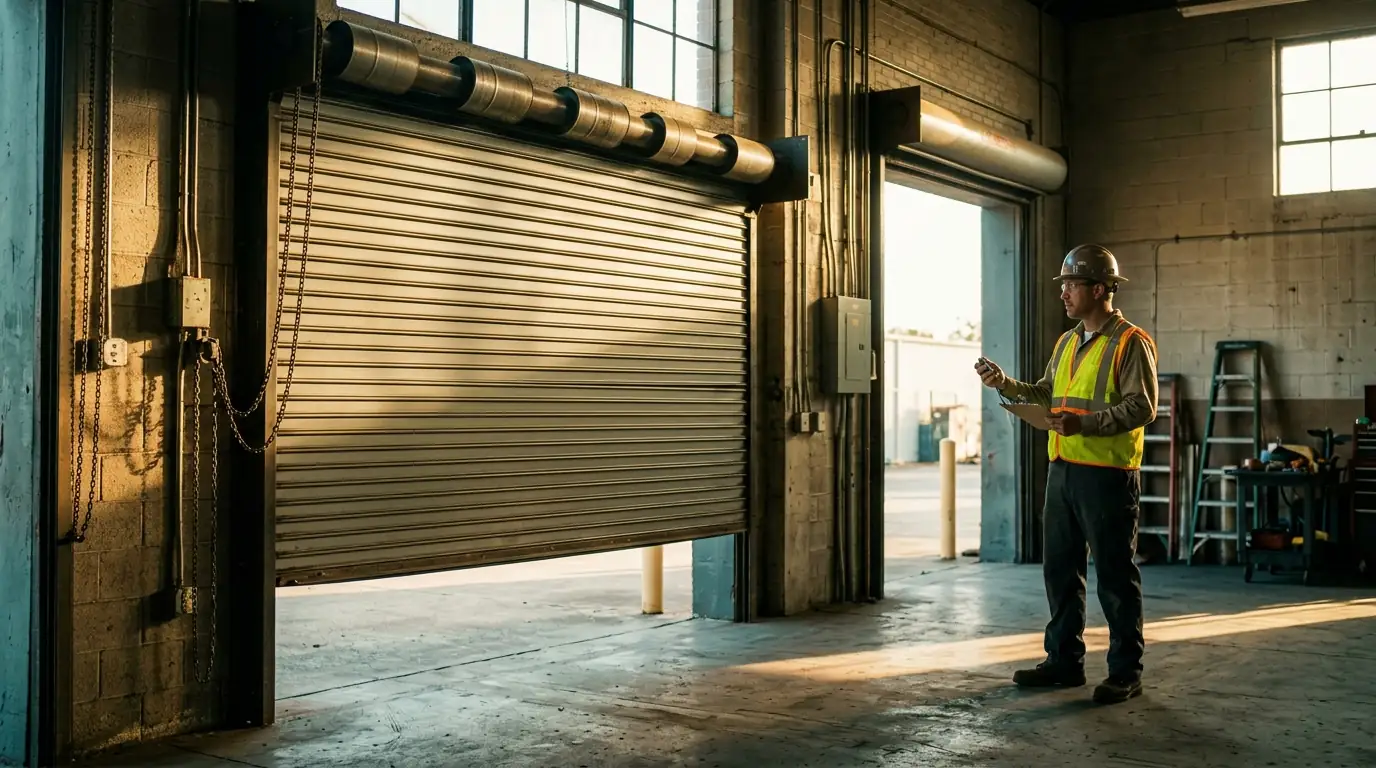
During the test we release the door through its normal release mechanism, confirm it closes completely without help, check that the closing speed stays within the maker's range, and confirm the bottom bar seats evenly. Doors that drift, stall or slam point to governor, spring or guide problems that would also show up in a real fire. Testing is scheduled around the building's operations, because the opening is blocked while the door is down and being reset. Any binding in the guides is noted and corrected.
Fusible link replacement
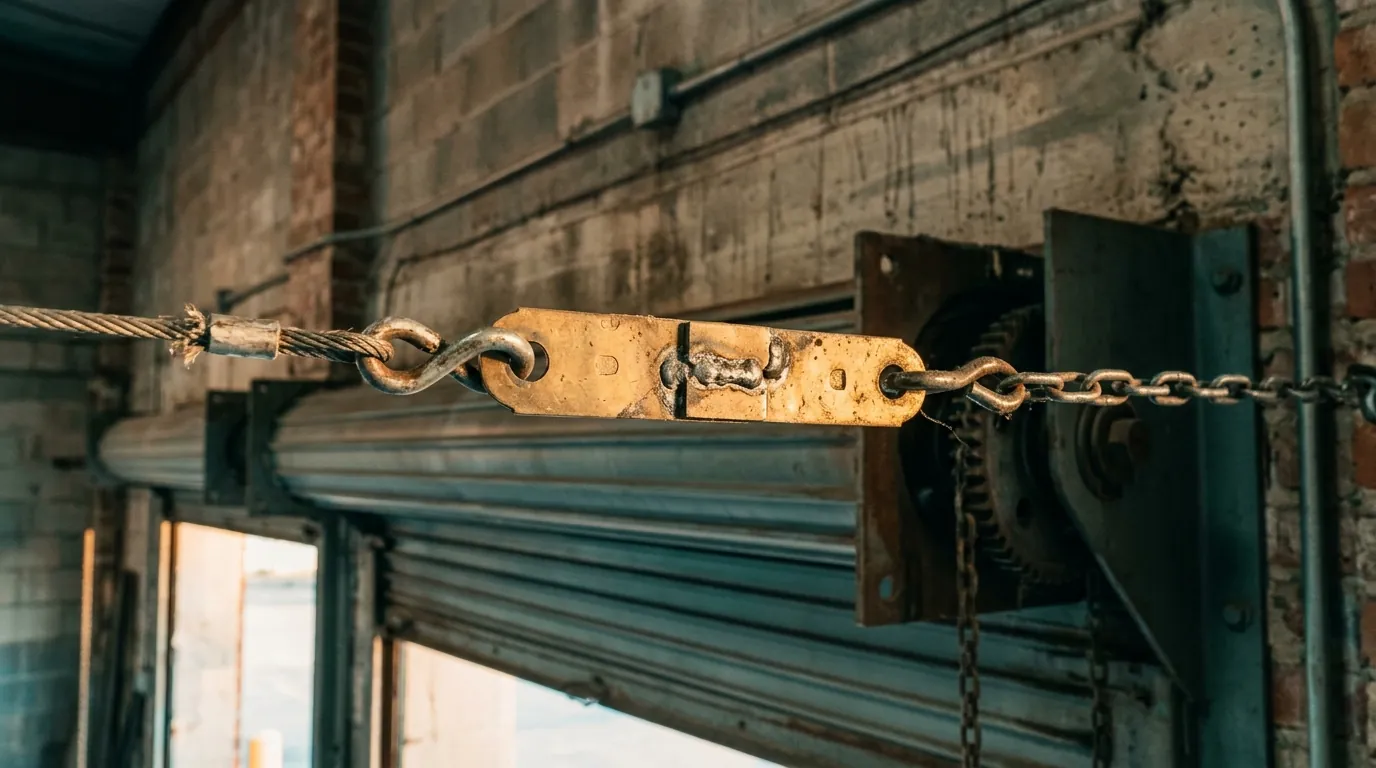
Fusible links are the small metal links that hold the door open and melt at a rated temperature in a fire. They are replaced after a drop test that uses them, and whenever they are painted over, corroded or the wrong rating for the location. We fit links of the rating the door's labels call for, check the release cable and pulleys they hang from, and confirm the release works freely before the door goes back into service. Painted or tampered links are always replaced.
Keeping inspection records
The test is only half of compliance; the record is the other half. We provide a written record for each door listing its location, the test date, how it performed, any repairs made and the parts replaced. Fire marshals and insurers ask for these records, and having them organized by door saves time when an inspection comes around, especially in buildings with many fire doors on different floors. Copies can be sent to your property manager or insurer on request, and earlier records are kept so changes over time are easy to see.
Fire doors in northwest Houston warehouses
The industrial parks around our Theall Rd office are built for warehouse, distribution and service tenants, the kinds of buildings where rolling fire doors separate storage areas and close off openings between units. Tenants turn over and racking moves, and both can leave a fire door blocked or its release disturbed, which is why an annual test catches more than just a worn link.
How a fire door test runs
Schedule
Testing planned around the building's hours.
Inspect
Labels, release, links, curtain and guides.
Drop test
Door released, timed and checked for full closure.
Reset and repair
Door reset, links replaced, faults repaired.
Record
Written result for each door.
What drives the cost of fire door testing
Testing is usually priced per door, with repairs quoted separately.
- 1
Number of doors. Several doors on one visit cost less per door.
- 2
Door size. Larger doors take longer to reset.
- 3
Fusible links and parts. Links and release parts replaced as needed.
- 4
Repairs found. Governor, spring or guide repairs are quoted first.
- 5
Access and scheduling. After-hours testing may cost more.
How long testing takes
A single drop test and reset usually takes well under an hour, plus time for any repairs. Buildings with several fire doors can be scheduled door by door to keep openings available, and we plan the order with you.
Questions about this job
Fire door drop testing questions
At least once a year under NFPA 80, the standard for fire doors.
A link that holds the door open and melts at a set temperature in a fire, releasing the door.
We repair the cause, usually the governor, springs or guides, and test again.
Yes, a written record for each door with the results and any repairs.
Yes, to keep openings available during business hours.
Yes, including release mechanisms, governors, curtains and guides.