Updated October 2026
Short answer
If you can see daylight under a closed Houston garage door, the bottom seal has worn, torn or shrunk, or the slab has dropped at one end. Replacing the seal and its retainer is usually a short visit, and a threshold seal on the floor can close a gap the door seal alone cannot.
Three seals keep the weather out
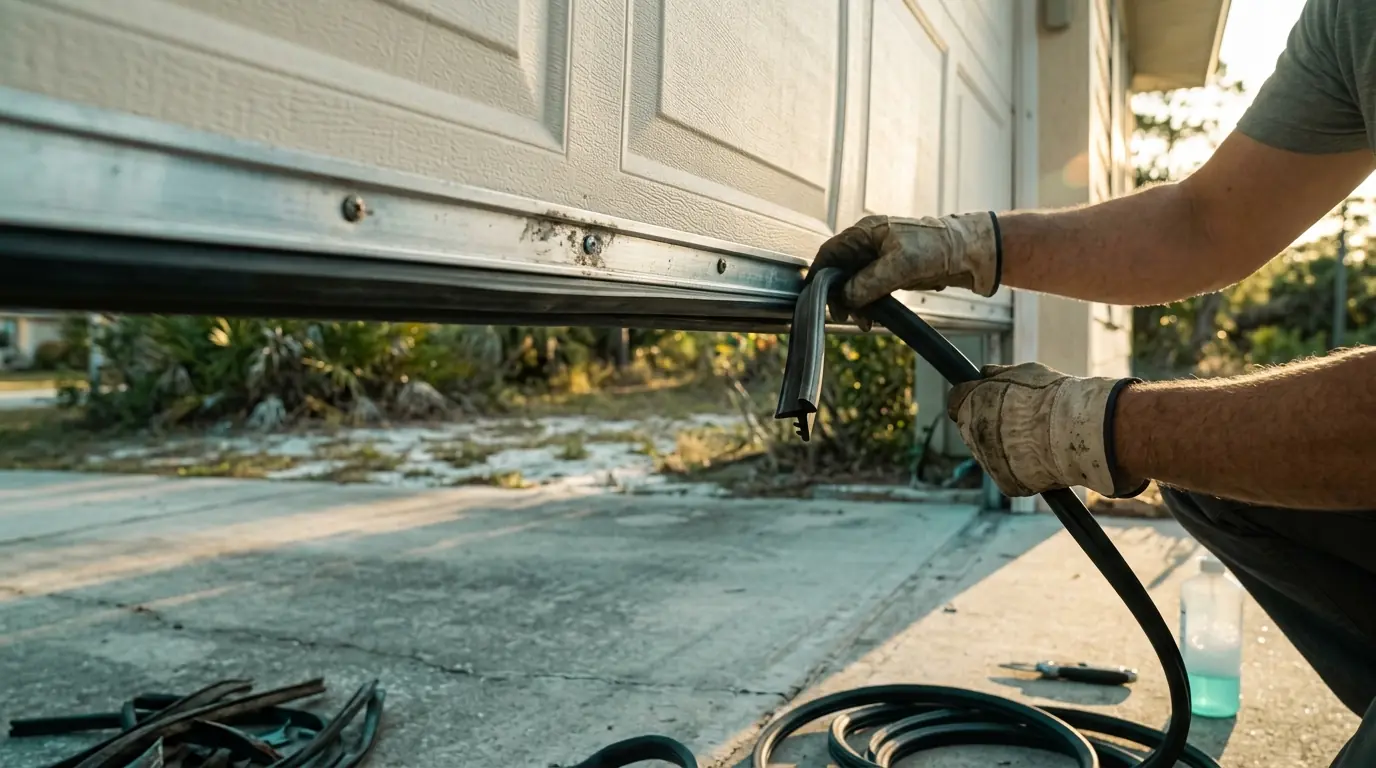
A garage door seals in three places: the rubber bottom seal that meets the slab, the stop molding along the sides and top of the frame, and sometimes a threshold seal fixed to the floor itself. Each wears differently. Bottom seals flatten, crack and tear; stop molding dries out and pulls away from the jamb; threshold seals get crushed by tires.
We look at all three when you call about one, because water and light usually find whichever gap is left. The goal is a door that closes against an even line of rubber all the way around.
What a seal replacement includes
- Checking all three seal points
- Removing the old bottom seal
- Replacing a rusted or bent retainer
- Fitting a matching seal profile
- New stop molding where it has hardened
- Checking the jamb for rot behind the molding
- Threshold seal where the slab dips
- Resetting the opener's close limit and force
Bottom rubber seal
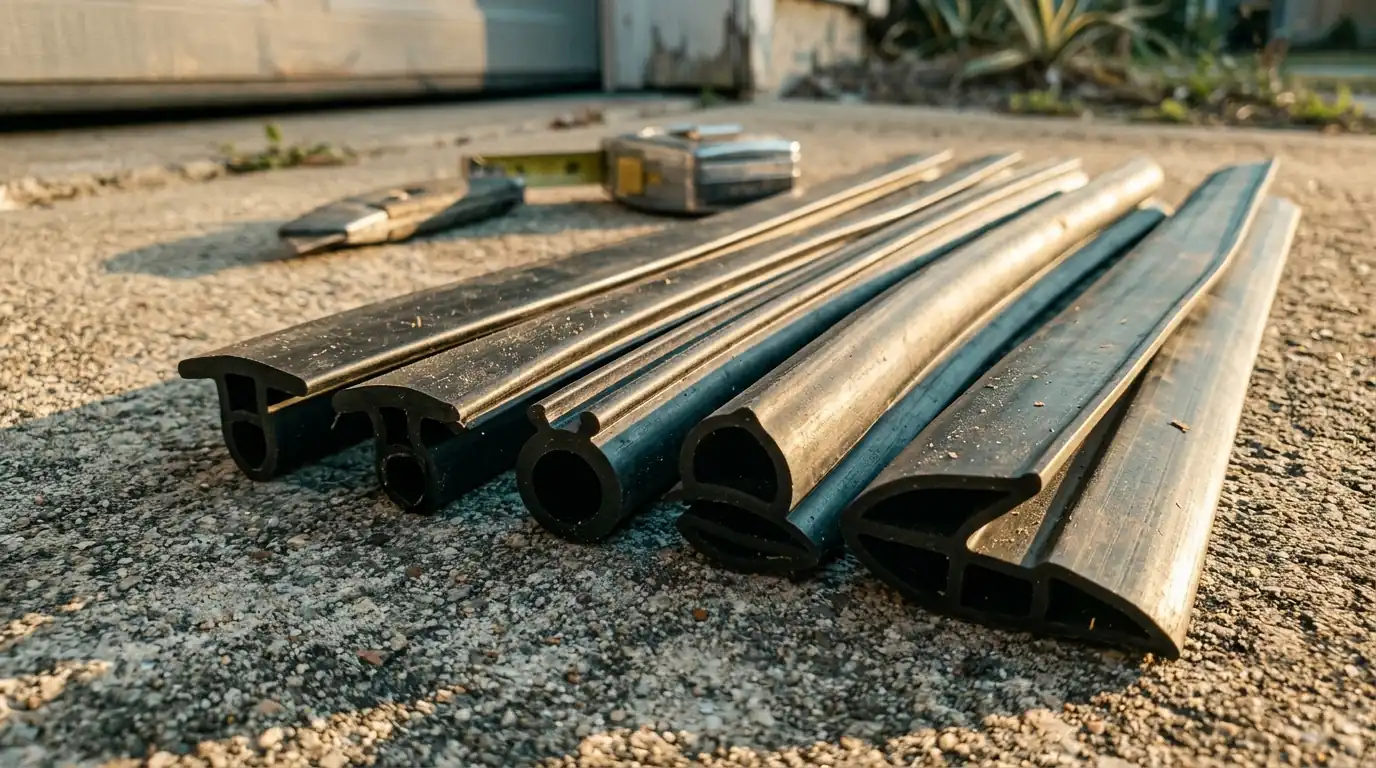
Most bottom seals are a rubber strip held in an aluminum or steel retainer along the base of the door. The strip comes in different profiles, including T-ends, bead ends and bulb shapes, and it has to match the retainer channel. When the retainer itself has rusted or bent, a new strip will not seat, so we replace the retainer too. A correct seal compresses evenly across the slab without forcing the opener to push harder to close. We also check that the retainer is screwed tight along its length.
Perimeter stop molding
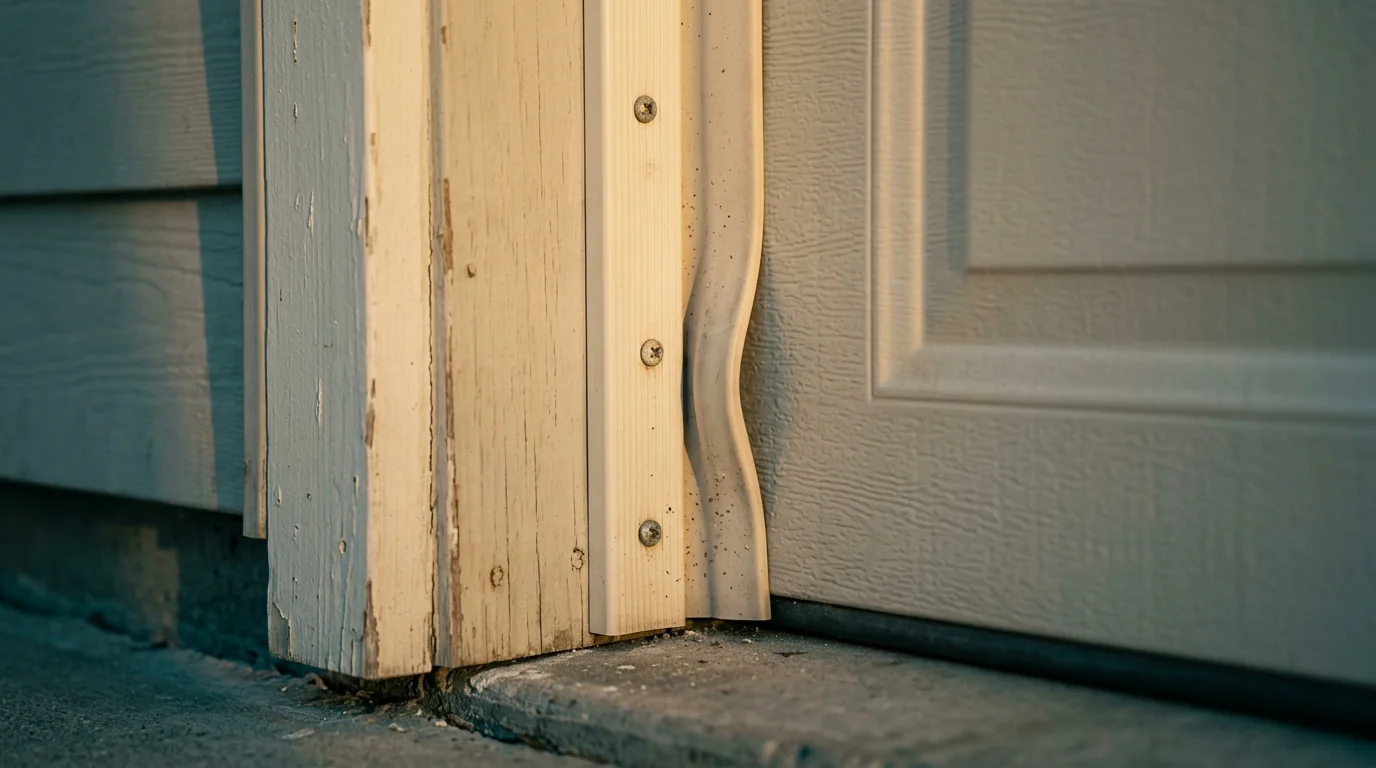
Stop molding is the vinyl or rubber strip nailed to the jamb and header, flexing against the face of the door when it closes. After years of sun and heat, the flexible edge hardens and gaps open at the sides. We remove the old strip, check the jamb for rot behind it, and fit new molding with the right contact so the door seals without dragging on its way up. Where the jamb has rotted, we tell you before fitting new molding, because nails will not hold in soft wood and the new strip would loosen within months.
Threshold seal for uneven slabs
When the slab has dropped or sloped at one side, no bottom seal is tall enough to close the gap evenly. A threshold seal is a raised rubber strip glued to the floor where the door lands, meeting the bottom seal to close the gap and help keep rainwater out. It also stops water that runs down a driveway from flowing under the door, which matters on garages that sit lower than the street. Threshold seals are glued, not bolted, so the slab is cleaned and dried before the strip goes down and left to cure before cars drive over it.
Settled slabs on north-side garages
Around our Theall Rd service office in northwest Houston, the median home dates to 1982, which means many garage slabs have had four decades to settle and crack. That is why so many of the seal calls we take from those subdivisions are not only worn rubber but an uneven landing, where the door seals at one end and leaves a wedge of daylight at the other. A threshold seal is often the piece that closes it.
How a seal replacement runs
Find the gaps
Door closed, light and gaps checked along all edges.
Remove old seals
Bottom strip out, molding pulled where needed.
Fit the new seals
Matching profile, new retainer or molding where required.
Add a threshold if needed
Where the slab dips or water runs in.
Reset and test
Close limit and force adjusted, auto-reverse tested.
What drives the cost of new seals
Seal work is one of the smaller garage door jobs. The price depends mainly on which seals are replaced and how long the door is.
- 1
Door width. A double door takes twice the seal length.
- 2
Retainer condition. A rusted retainer adds a part and labor.
- 3
Stop molding. Replacing sides and header adds material.
- 4
Threshold seal. Adds a floor-mounted strip and adhesive.
- 5
Jamb repair. Rot found behind the molding is quoted separately.
Questions about this job
Garage door seal questions
The bottom seal has worn or shrunk, or the slab has dropped at one end.
When it cracks, flattens or tears. Heat and sun shorten its life.
A good bottom seal plus a threshold seal stops most rain and driveway runoff.
No. The seal profile has to match the retainer channel on your door.
They cut drafts and gaps, which helps, but an insulated door does far more for heat.
Yes, including bottom seals on dock and bay doors.