Updated October 2026
Short answer
Extension spring replacement in Houston typically costs $120 to $200 according to This Old House's 2026 figures, a little less than torsion springs. These springs run along each horizontal track, and a missing safety cable is the most important thing to fix at the same time.
Signs an extension spring is failing
A spring visibly stretched or gapped
Coils that no longer close up have lost tension.
Door lifts crooked
One side spring is weaker than the other.
Door feels heavy at the bottom
The springs are not carrying the weight.
No cable through the springs
A broken spring could fly loose.
Frayed lift cable at the pulley
Worn pulleys wear the cable.
How an extension spring job runs
Door open and secured
Springs are relaxed with the door up, so that is when they are changed.
Size the springs
Door weight checked, matching springs chosen.
Fit springs and cables
Both springs replaced, safety cables threaded and anchored.
Check pulleys and lift cables
Worn parts replaced so the new springs last.
Balance and test
Door level, lifts evenly, auto-reverse tested.
How extension springs work
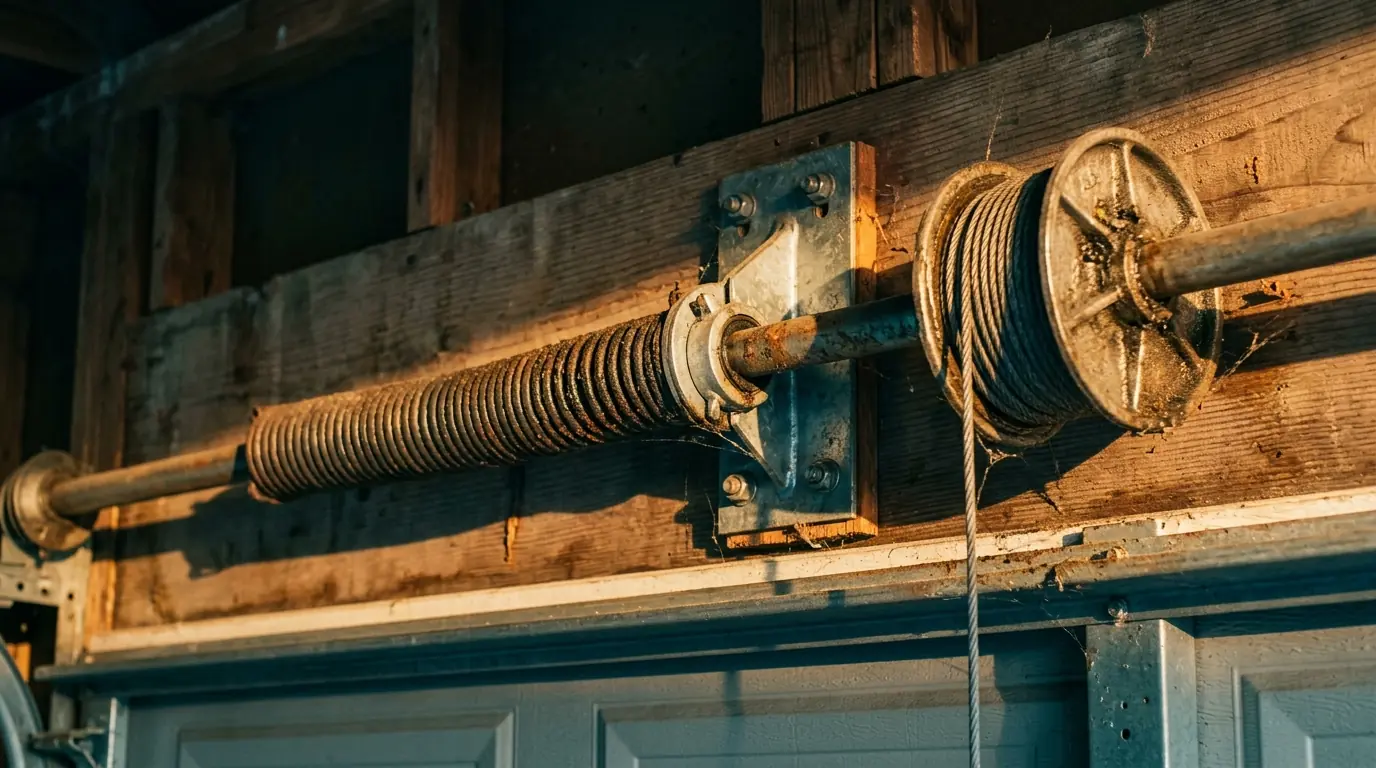
Older doors and many lighter single doors use extension springs instead of a torsion spring above the opening. They stretch along each horizontal track as the door closes and pull it up as they contract, working through a pulley and cable on each side.
Because they hold their energy by stretching, a spring that breaks without a safety cable through it can fly across the garage. That is why we fit safety cables on any extension-spring door we touch, even when only one spring broke.
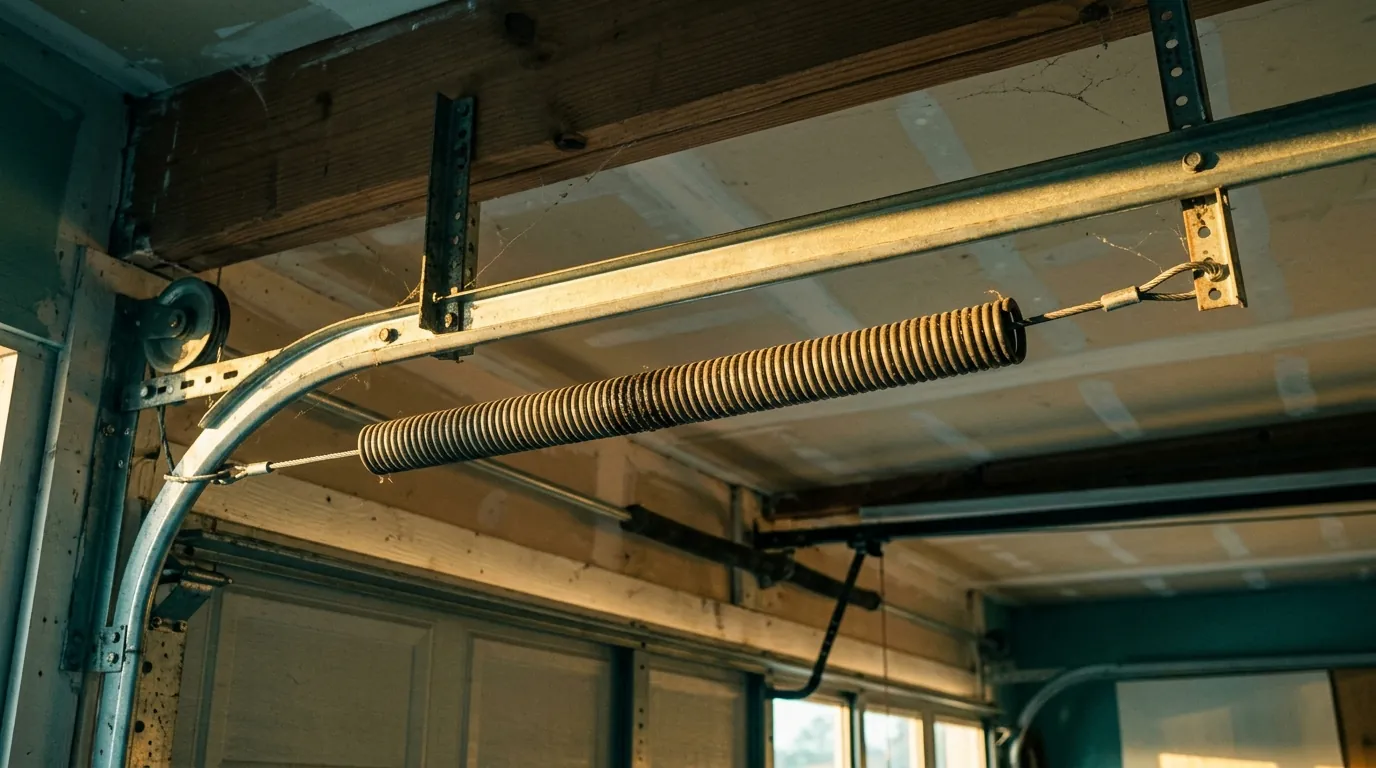
Side spring broke
A broken extension spring leaves the door heavy and lopsided, and the opener struggles on one side. Springs are sized by the door's weight and color-coded by strength, and both sides need to match or the door lifts crooked. We replace both, along with any pulley that has worn grooves, because a worn pulley shortens a new spring's life by fraying the cable that runs through it. We also check the eye bolts and S-hooks that hold the spring ends, since a bent hook can release a new spring under load.
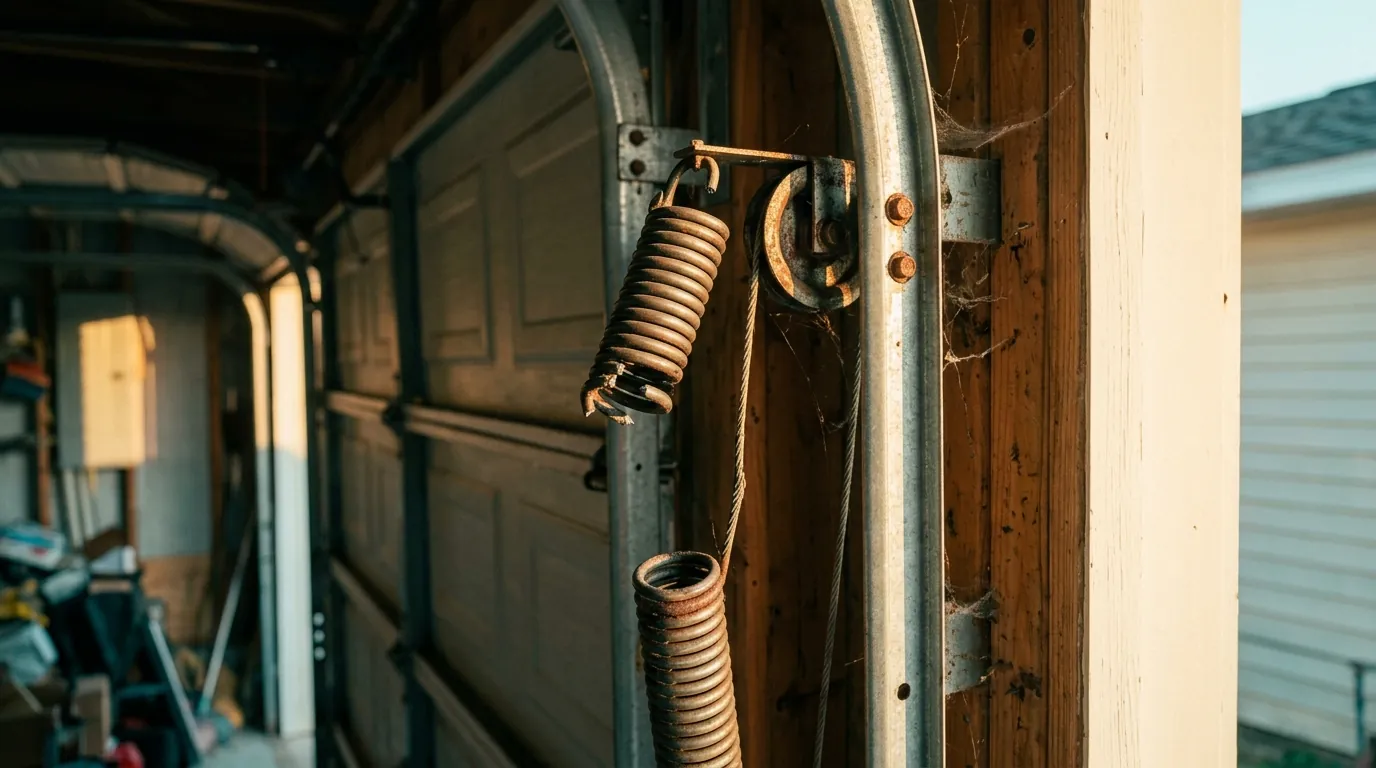
Missing safety cables
A safety cable runs through the center of each spring and is anchored at both ends, so a broken spring stays on the cable instead of flying loose. Many older installs never had them, or they were removed during a past repair. Fitting them is inexpensive, quick, and the single most important safety step on an extension-spring door. If your door has no safety cables and the springs are still fine, fitting cables on their own is a small, worthwhile job, and we can do it on any visit. It is the one extension-spring upgrade we recommend on every door.
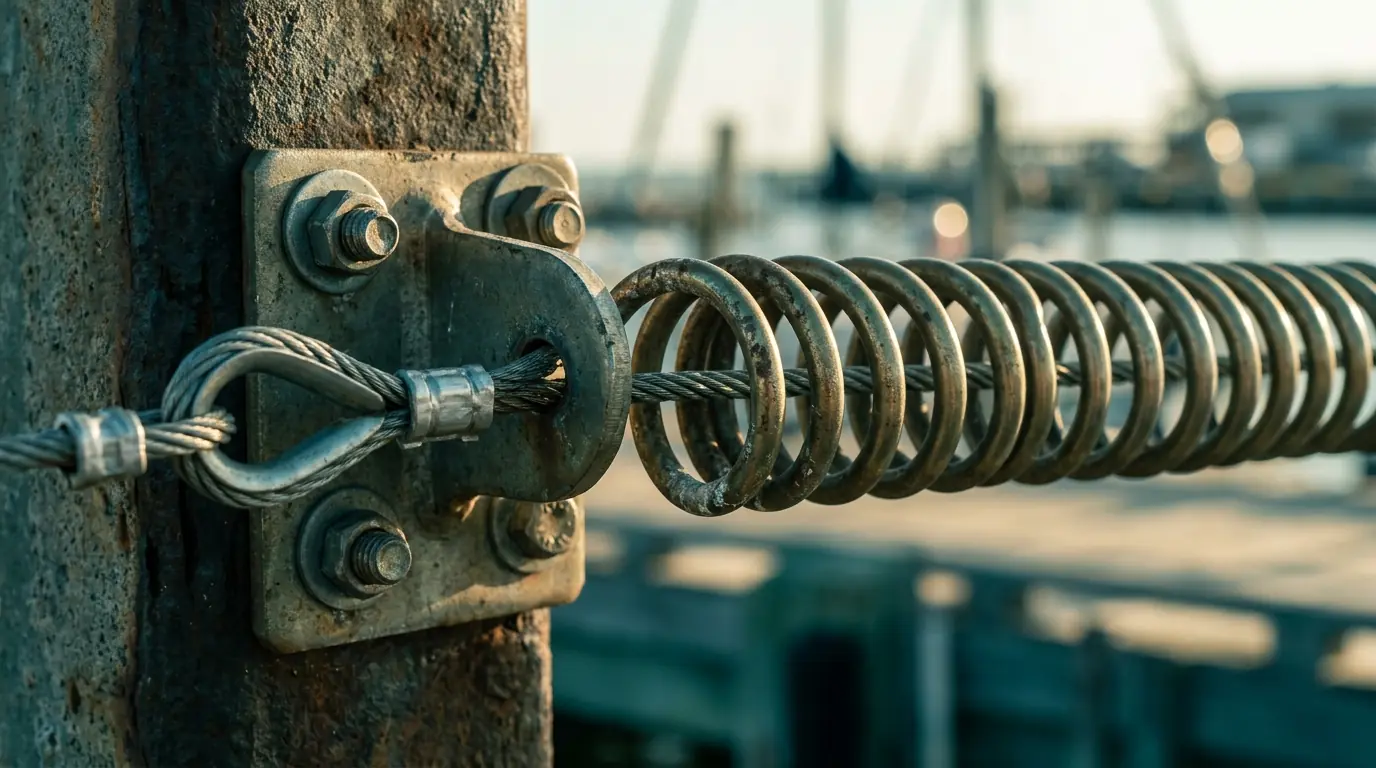
Converting to a torsion system
On heavier doors, a torsion conversion replaces both side springs with a spring above the opening on a shaft. It balances the door more evenly, removes the whip risk, and gives smoother travel. It costs more than replacing the extension springs, and it needs a few inches of headroom above the door, so we measure before we suggest it. On lighter doors in good condition, new extension springs with safety cables are a sound repair, and we will tell you plainly when a conversion is not worth the extra cost.
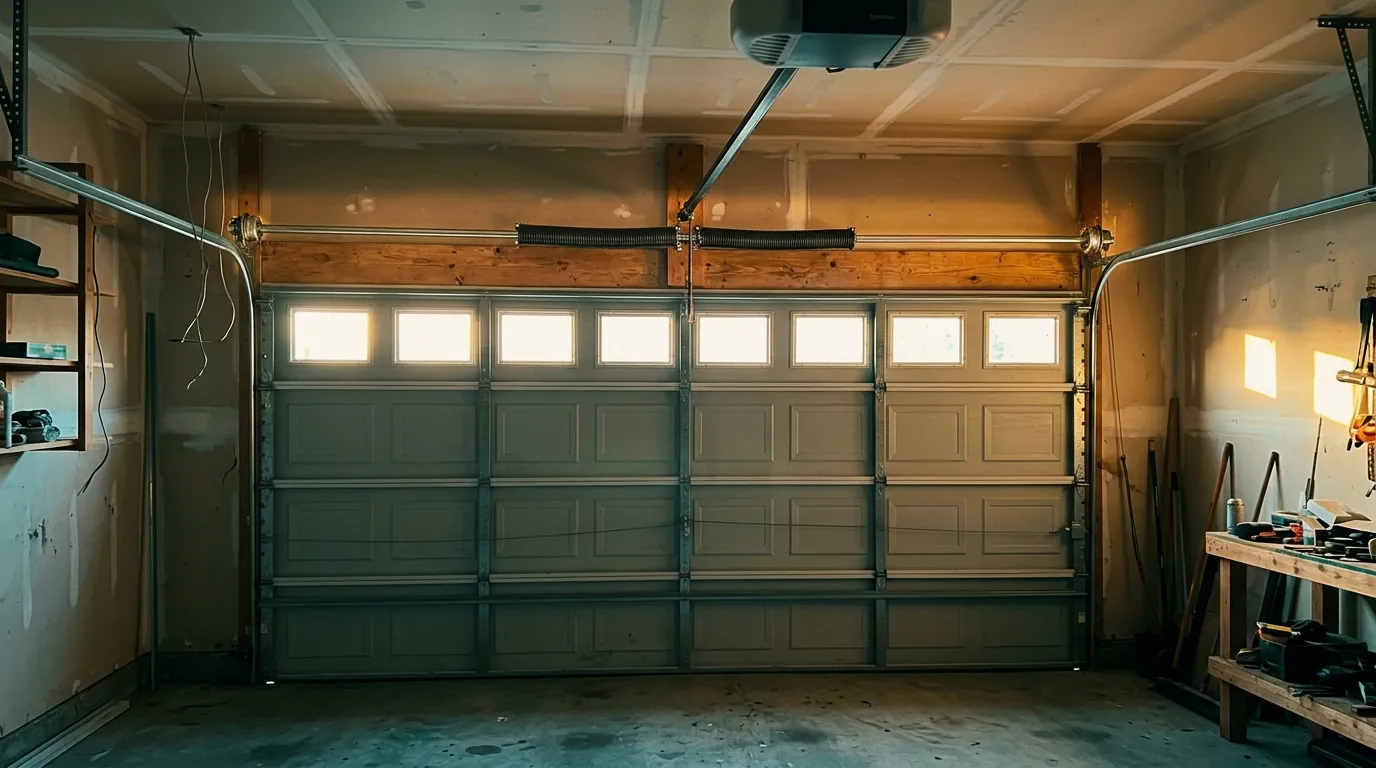
What is safe to do with extension springs
Extension springs look simpler than torsion springs, and that is why people get hurt on them.
| Task | Doing it yourself | Why we handle it |
|---|---|---|
| Check for safety cables | Safe to look. | If there is no cable through the spring, call. |
| Close the door and unplug the opener | Safe. | With the door down, the springs are at full stretch, so leave them alone. |
| Replace a spring | Not safe. | The spring is under tension whenever the door is closed. |
| Swap pulleys or cables | Not safe. | Those parts carry the spring load. |
| Match spring strength | Hard to get right. | Springs are sized to the door's weight. |
Why so many north-side doors still run side springs
Around our Theall Rd service office in northwest Houston, the median home was built in 1982, and doors from that era often went in on extension springs. Many have been repaired since, but not always with safety cables, so on extension-spring calls in these subdivisions we check for cables first. On heavier replacement doors from later years, a torsion conversion is often the cleaner fix.
What extension spring replacement costs
This Old House's 2026 guide puts extension spring replacement at $120 to $200, and torsion spring work at $140 to $350. A conversion costs more than either because it adds a shaft, drums and a new spring. We price on site.
- 1
Pair or single. We replace springs in pairs so the door lifts level.
- 2
Safety cables. Fitting them adds a small cost and a large safety margin.
- 3
Pulleys and cables. Worn pulleys and frayed cables are best replaced together.
- 4
Door weight. Heavier doors need stronger springs.
- 5
Conversion. Moving to torsion adds parts and labor.
Questions about this job
Extension spring questions
Extension springs stretch along the side tracks; a torsion spring winds on a shaft above the door. Torsion systems usually balance heavier doors more smoothly.
Yes. They keep a broken extension spring from flying across the garage.
Yes. Matched springs keep the door lifting level.
Usually, if there is enough headroom above the door. We measure before suggesting it.
One side spring is weaker or one cable is worn. Replacing the pair usually fixes it.
Like all springs they are rated by cycles, so a door used often wears them out sooner.