Updated October 2026
Short answer
A broken torsion spring is the most common reason a Houston garage door will not open, and replacing one typically costs $140 to $350 according to This Old House's 2026 figures. The spring lifts most of the door's weight, so with it broken the opener is lifting dead weight and will strip its gear if you keep trying.
Signs a torsion spring is broken or failing
A loud bang from the garage
Usually the moment the spring breaks.
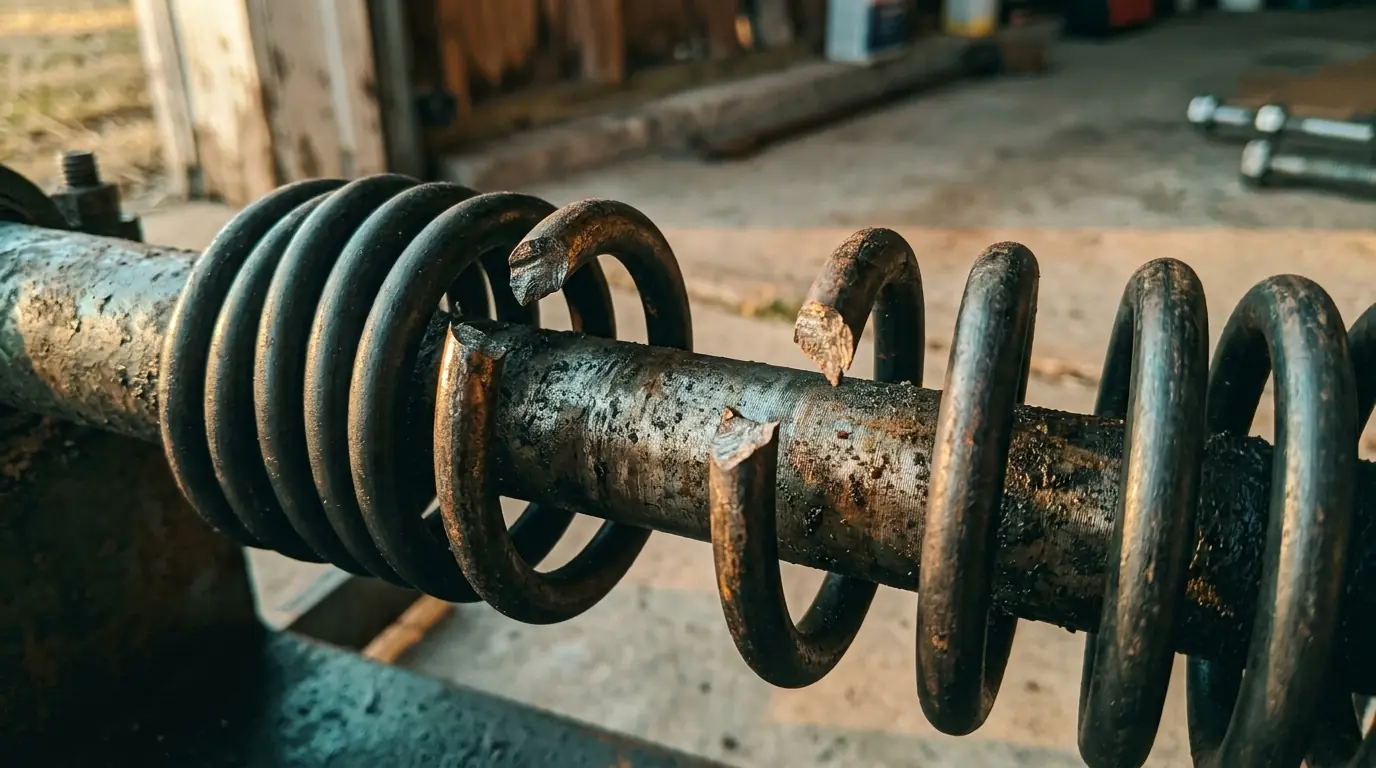
A gap in the spring coils
Look above the door for a two-inch gap in the spring.
The door feels very heavy
It should lift easily by hand when disconnected.
The opener lifts a few inches and stops
Its safety limit trips against dead weight.
Cables look loose
The drums are not turning with tension behind them.
How a spring replacement runs
Secure the door
Door down, opener unplugged, vise clamps on the track.
Unwind safely
Tension let off the old springs with proper winding bars.
Measure and fit
New springs matched to the door's weight and the old spring's specs.
Wind and set
The right number of turns, set screws tightened, cables tensioned evenly.
Balance and test
Door holds at half open by hand, then full cycles and an auto-reverse test.
What a torsion spring does, and why it breaks
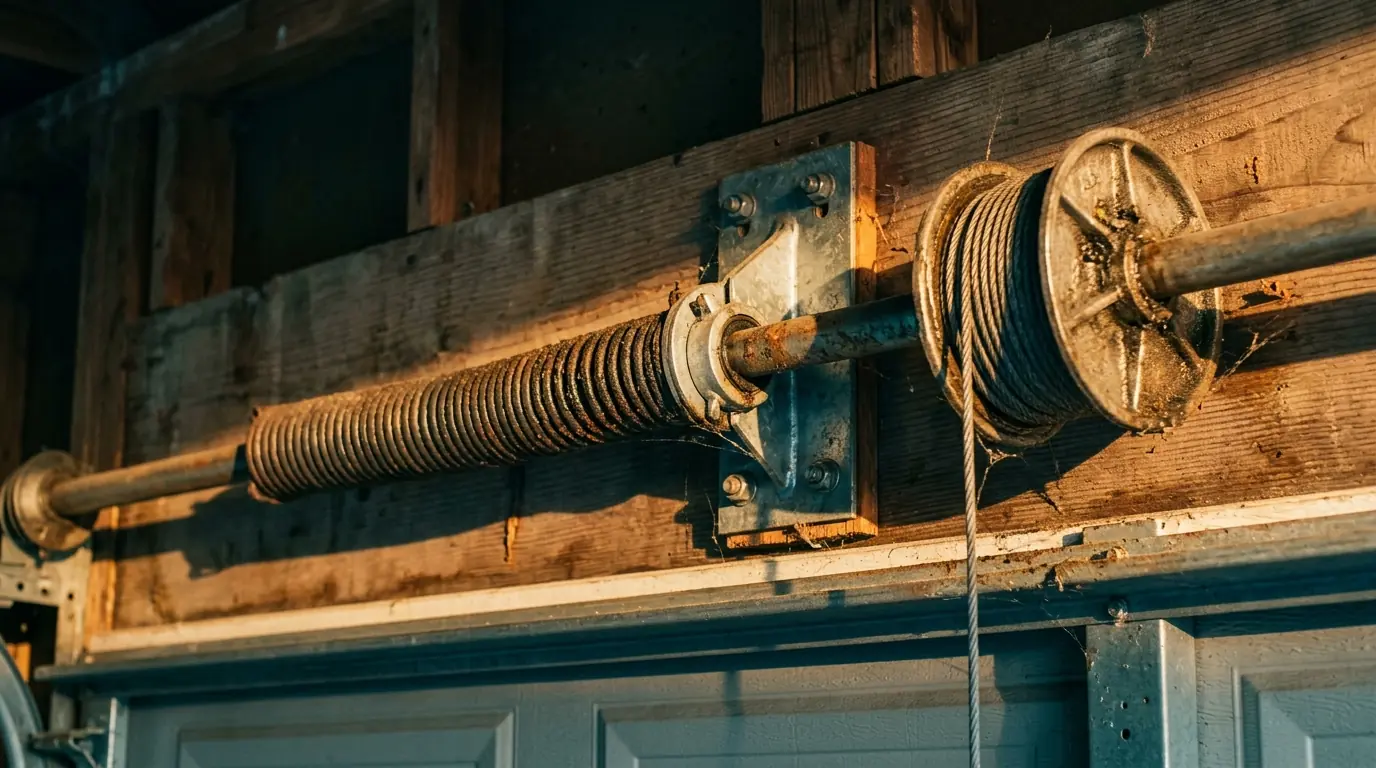
The torsion spring sits on a steel shaft just above the door opening. As the door closes, the spring winds up; as it opens, the spring unwinds and turns the cable drums, lifting the door. Every open and close is one cycle, and a standard spring is rated for a set number of them before the steel fatigues.
Springs usually break at the end of their cycle life, but Houston's damp air speeds things up: rust on the coils adds friction and pits the steel where cracks start. A spring that has rusted is one we expect to fail sooner, which is why we look at its partner and the cables while we are there.
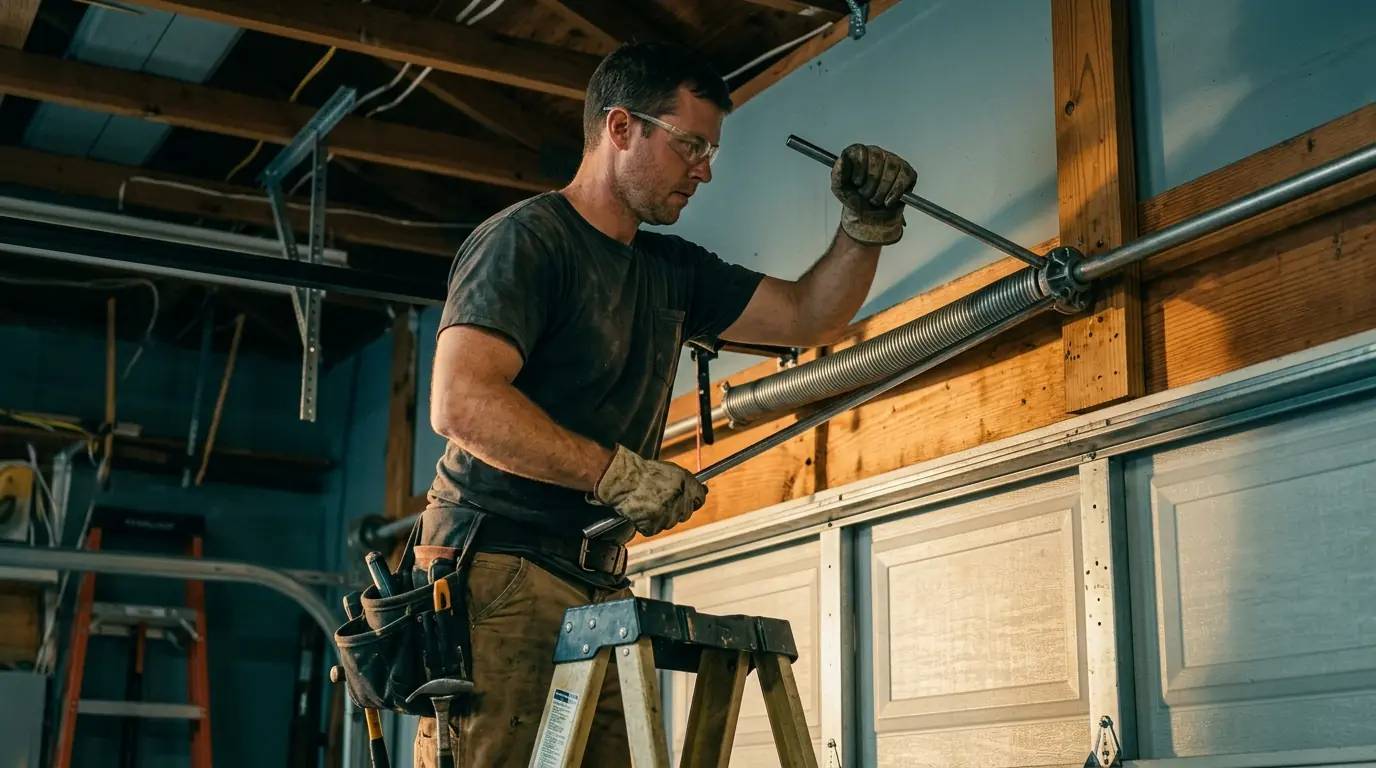
One spring snapped on a two-spring door
Two-spring doors split the load, so when one breaks the other is carrying the whole door and has run the same number of cycles. Replacing only the broken one usually means a second call within months. We replace both, matched for wire size, inside diameter and length, so the door stays balanced side to side. Matched springs also share the work evenly, so the cables wind onto both drums at the same rate and the door does not rack toward one side as it rises. That evenness is what keeps the opener from straining.
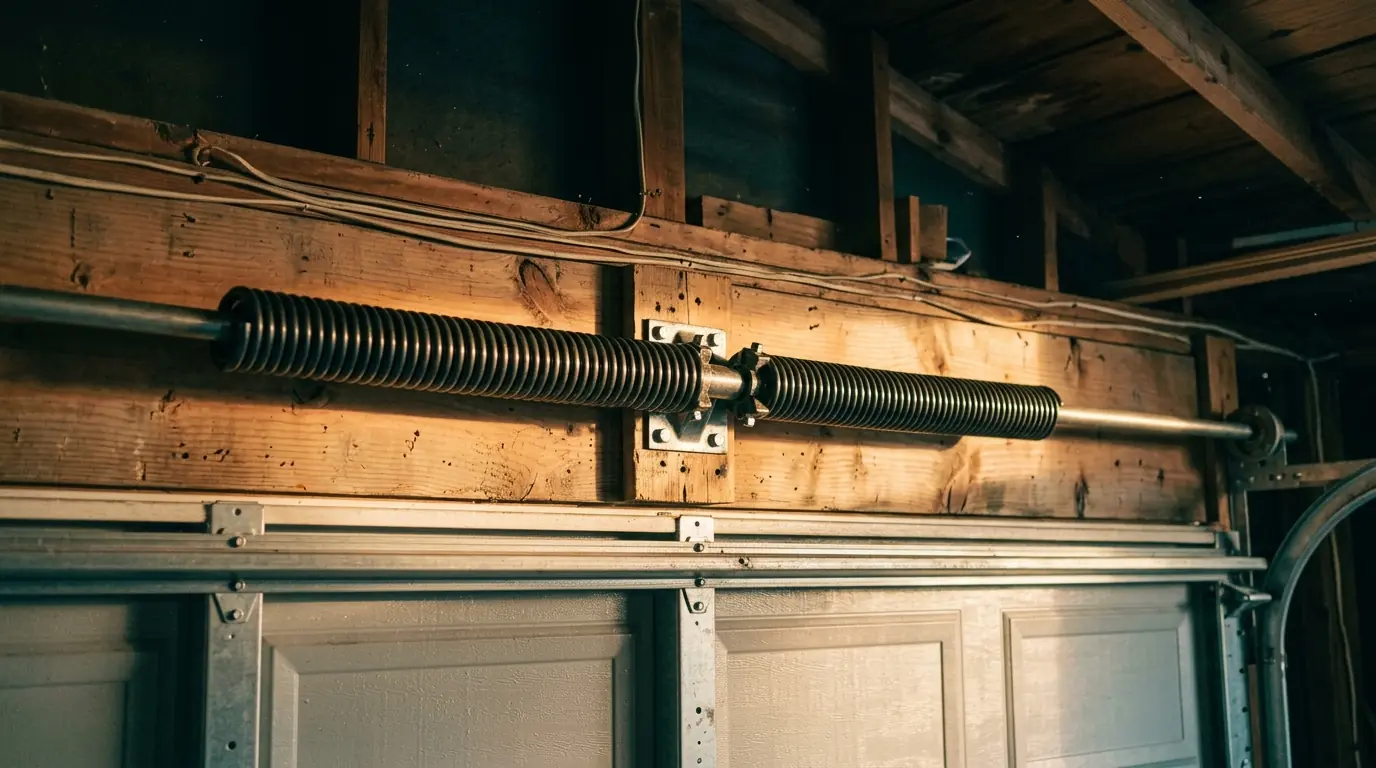
Single-spring doors
Many single-car doors and lighter double doors run on one spring. Replacement is simpler, but the size still has to be right: a spring that is too strong makes the door fly up, and one that is too weak leaves the opener lifting. We measure the old spring and weigh the door rather than guessing from its width. If the door is heavy for a single spring, we may suggest moving to two springs on the same shaft, which spreads the load and usually gives a longer service life.
High-cycle spring upgrade
A busy garage, where the door is the main way in and out of the house, can run four or more cycles a day. High-cycle springs use heavier wire and longer bodies to last more cycles for the same door. They cost more up front, and we only suggest them when your use pattern makes the trade worth it. We work out the cycle count from how your household uses the door, then show you the price difference between a standard pair and a high-cycle pair before you decide.
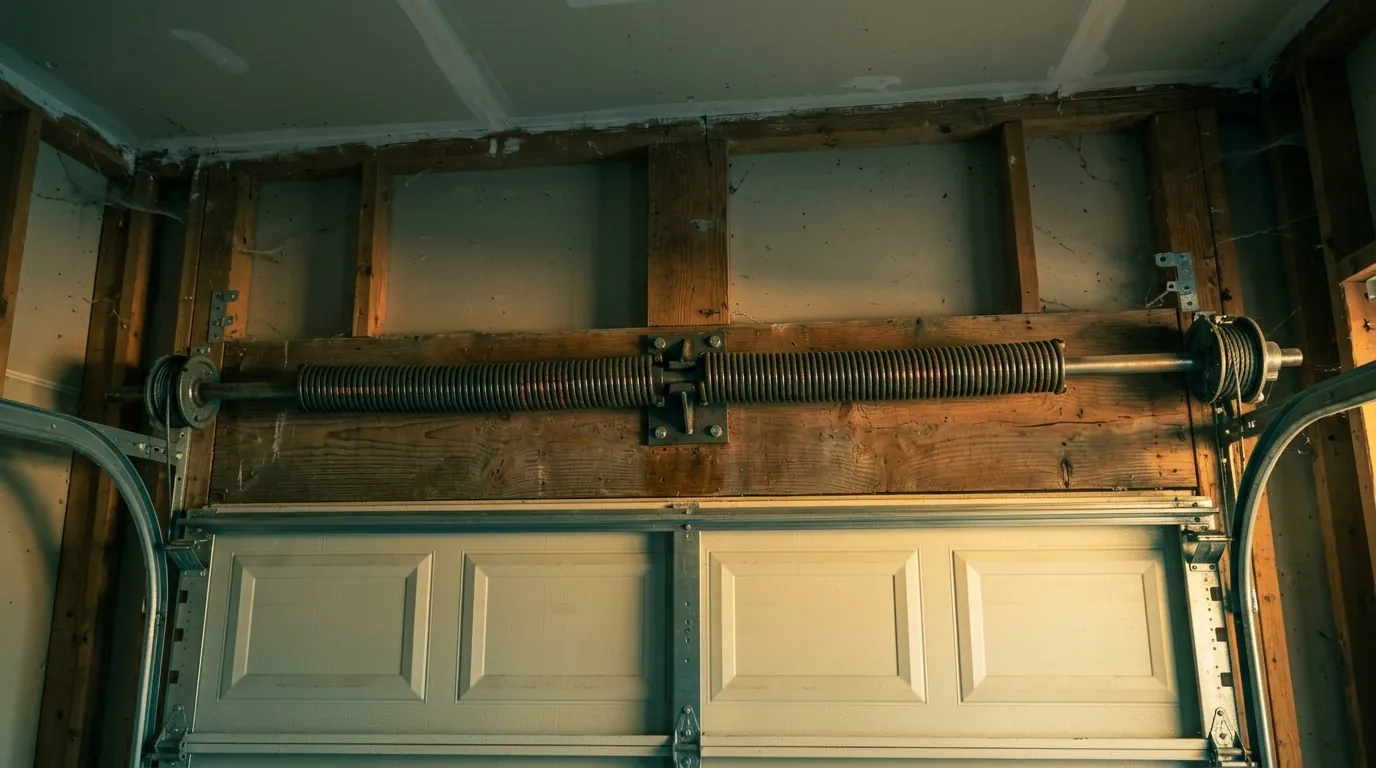
Why spring replacement is not a DIY job
Torsion springs are wound under heavy tension, and most injuries come from letting that tension go the wrong way.
| Task | Doing it yourself | Why we handle it |
|---|---|---|
| Spot the broken spring | Safe from the floor. | A gap in the coils confirms it. |
| Unplug the opener | Safe, and recommended. | Stops the motor straining against the door. |
| Unwind the old spring | Not safe. | The winding cone can spin and strike your hand or face. |
| Size a new spring | Hard to get right. | Wire size, diameter and length all depend on the door weight. |
| Wind and set the new spring | Not safe. | Takes proper winding bars and a set number of turns. |
Why springs rust out sooner in Houston
Houston's relative humidity runs above 90 percent most mornings and drops to around 60 percent in the afternoon, so the steel above a garage door goes through a wet-dry cycle almost every day. Torsion springs are bare oil-tempered or lightly coated steel, and rust on the coils adds friction and pits the wire. When we replace a spring here we oil the new coils and check the cables and drums for the same rust.
What torsion spring replacement costs
This Old House's 2026 guide puts torsion spring replacement at $140 to $350, with double doors that need multiple springs at $300 to $600. Those are national ranges; we price your door on site after measuring the old springs.
- 1
One spring or two. Two-spring doors cost more, and we replace them as a pair.
- 2
Door weight. Heavier, insulated or wood doors need heavier springs.
- 3
Standard or high-cycle. High-cycle springs cost more and last longer.
- 4
Cables and drums. Frayed cables or worn drums are cheaper to replace on the same visit.
- 5
Center bearing and end plates. Worn bearings make a new spring work harder.
Questions about this job
Torsion spring questions
Look at the spring above the door. A clear gap of an inch or two in the coils means it has snapped, and the door will feel much heavier.
On a two-spring door, yes. The second spring has the same wear and usually fails soon after the first.
Springs are rated by cycles, so it depends on use. A door opened several times a day wears its springs much faster than one used once.
We advise against it. The door is very heavy without the spring, and forcing it can damage the opener or drop the door.
Not automatically. We check the cables, and if they are frayed or rusted we recommend replacing them on the same visit.
A spring made with heavier wire and a longer body so it lasts more open and close cycles on the same door.