Updated October 2026
Short answer
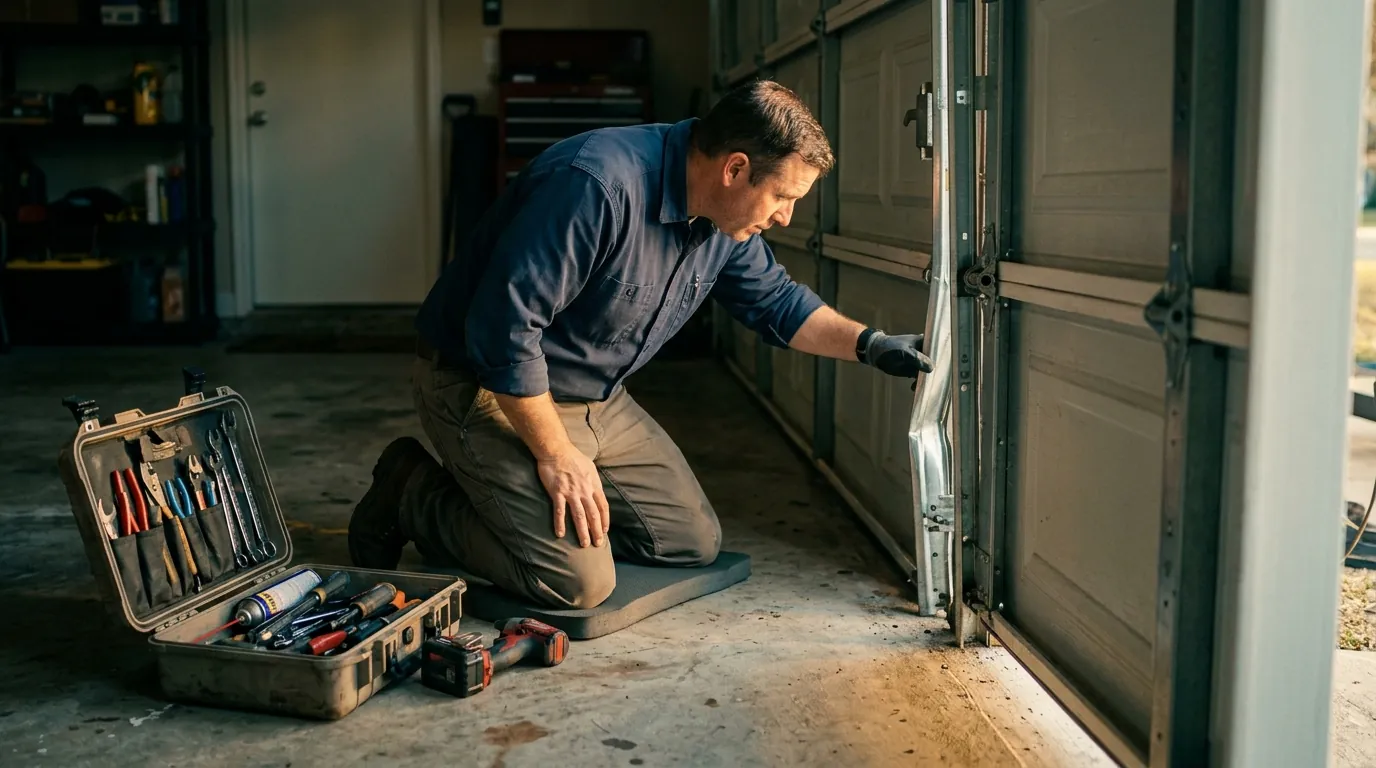
Most Houston garage door emergencies come down to a door that will not close or will not open, and the safest move in the first ten minutes is to stop pressing the opener button. A broken spring or snapped cable puts the full weight of the door on parts that were never meant to hold it.
Signs you should call before touching the door
A bang like a gunshot
That is usually a torsion spring snapping. Leave the door where it is.
A cable hanging loose
A slack cable means the door is not supported on that side.
The door hangs crooked
One side lower than the other can drop without warning.
The opener hums but nothing moves
The motor is fighting dead weight and will strip its gear.
Rollers outside the track
A door out of its track can fall inward or outward.
What happens on an emergency call
You call any hour
We ask whether the door is up or down, what you heard and whether a car needs to get out.
We tell you what is safe
Unplug the opener, keep clear of the door, and leave the release cord alone if the door is open.
We secure the door
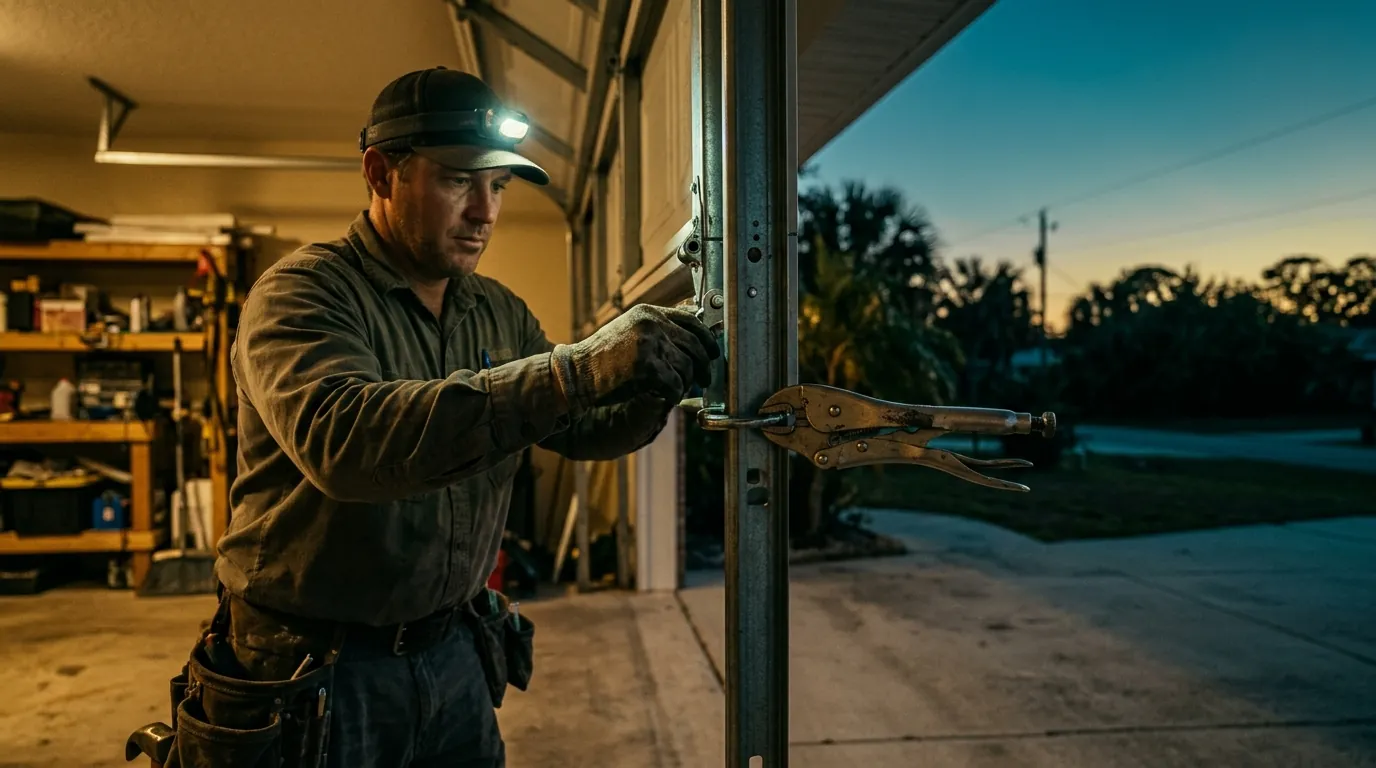
Clamps on the track, tension relieved, and the door brought to a safe position.
We repair what failed
Spring, cable, rollers or track, replaced or reset while we are there when the part is on hand.
We test before we leave
Balance check, auto-reverse test and full cycles with you watching.
What counts as a garage door emergency
We treat a call as an emergency when the door leaves the house open, traps a vehicle someone needs, or hangs in a way that could drop. That covers a door frozen half open at 11 p.m., a car that has to reach a hospital shift, and a section folded after the car clipped it on the way out.
On the phone we ask what you heard, whether the door is up or down, and whether the cables are still on their drums. Those three answers tell us which parts to load, and whether the door should be left exactly where it is until we arrive.
Door stuck open at night
A door that will not come down leaves the garage, and often the house, open. If the opener runs but the door stops, the sensors or the travel limit are usually the cause; if the motor hums and nothing moves, suspect a spring. We bring the door down under control, lock it, and then fix the cause, so you are not left choosing between security and a proper repair. If the door stopped because something blocked the beam, clearing it may be all it takes; if it stopped on its own with a loud noise, leave it for us.
Car trapped behind a closed door
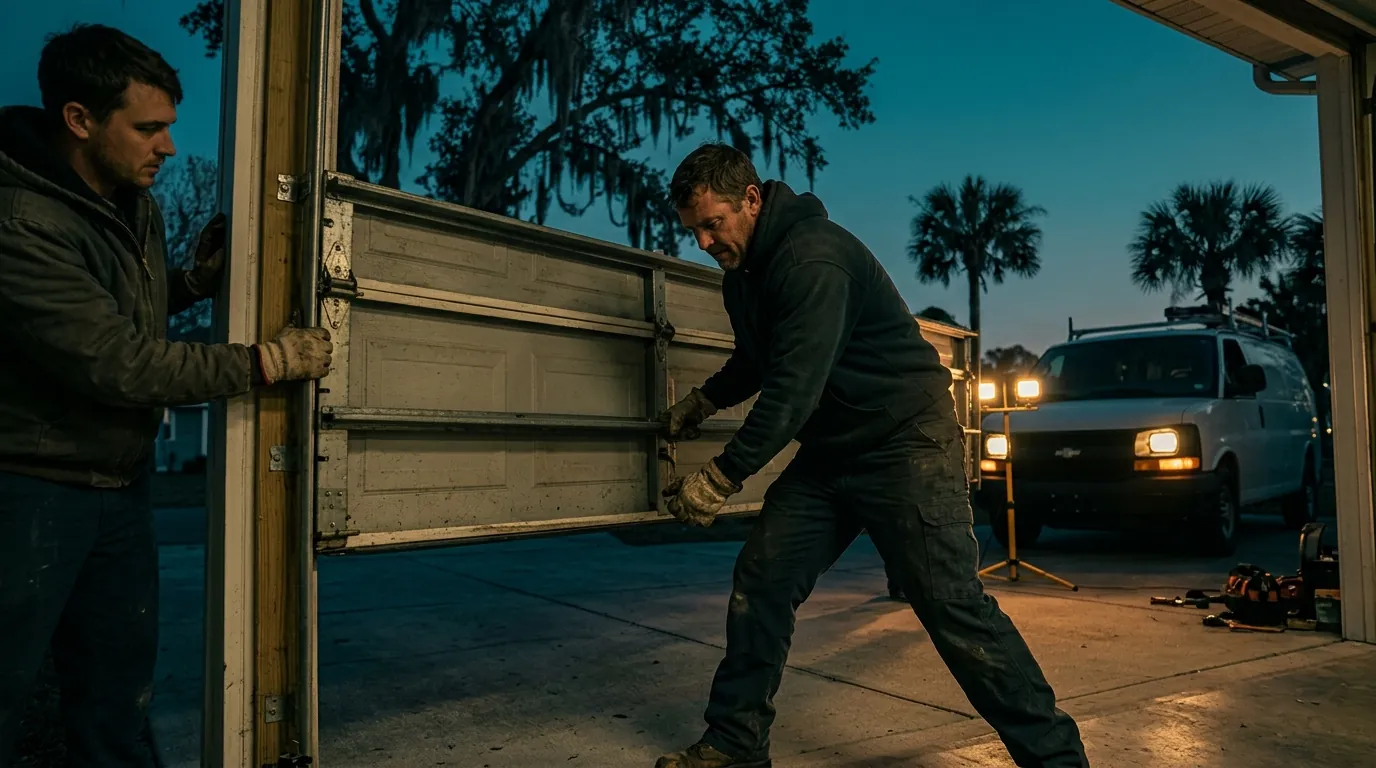
When the spring breaks with the door shut, the opener cannot lift it, and forcing the button strips the drive gear. The car stays inside until the spring is replaced or the door is lifted safely with clamps holding it. For a vehicle you need that night, we can usually free it first and finish the spring on the same visit. Tell us when you need the car out, and we plan the visit around that, because the order of the work changes when a vehicle has to leave first.
Door dropped or came down hard
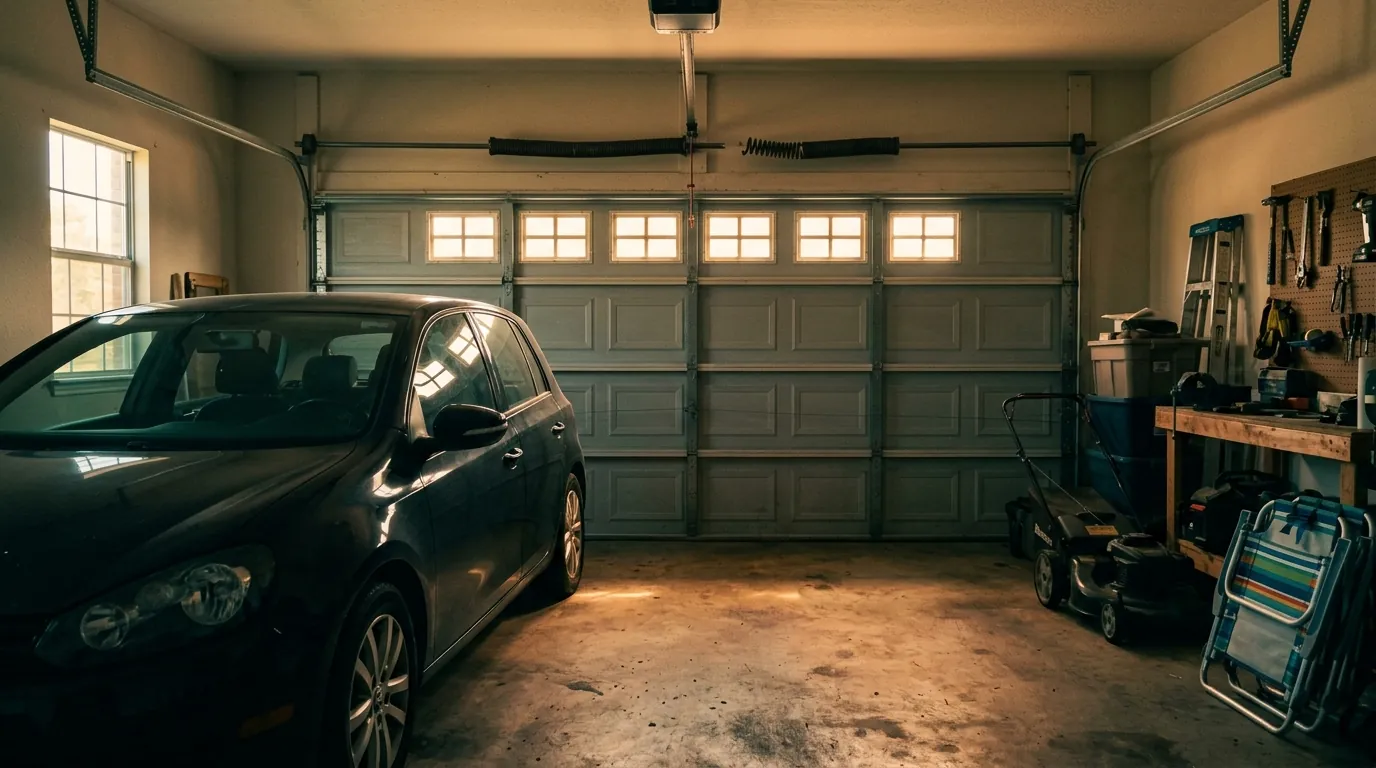
A door that slams onto the slab has lost its counterbalance, almost always a spring or a cable. The bottom section often cracks or bends on impact, and the rollers can pop loose. We check the bottom brackets, the hinges on the lowest two sections and the cable drums before the door moves again, because a second drop does more damage than the first. If the door came down on a car or a person, take photos before anything is moved; your insurer may ask for them, and they help us see what failed.
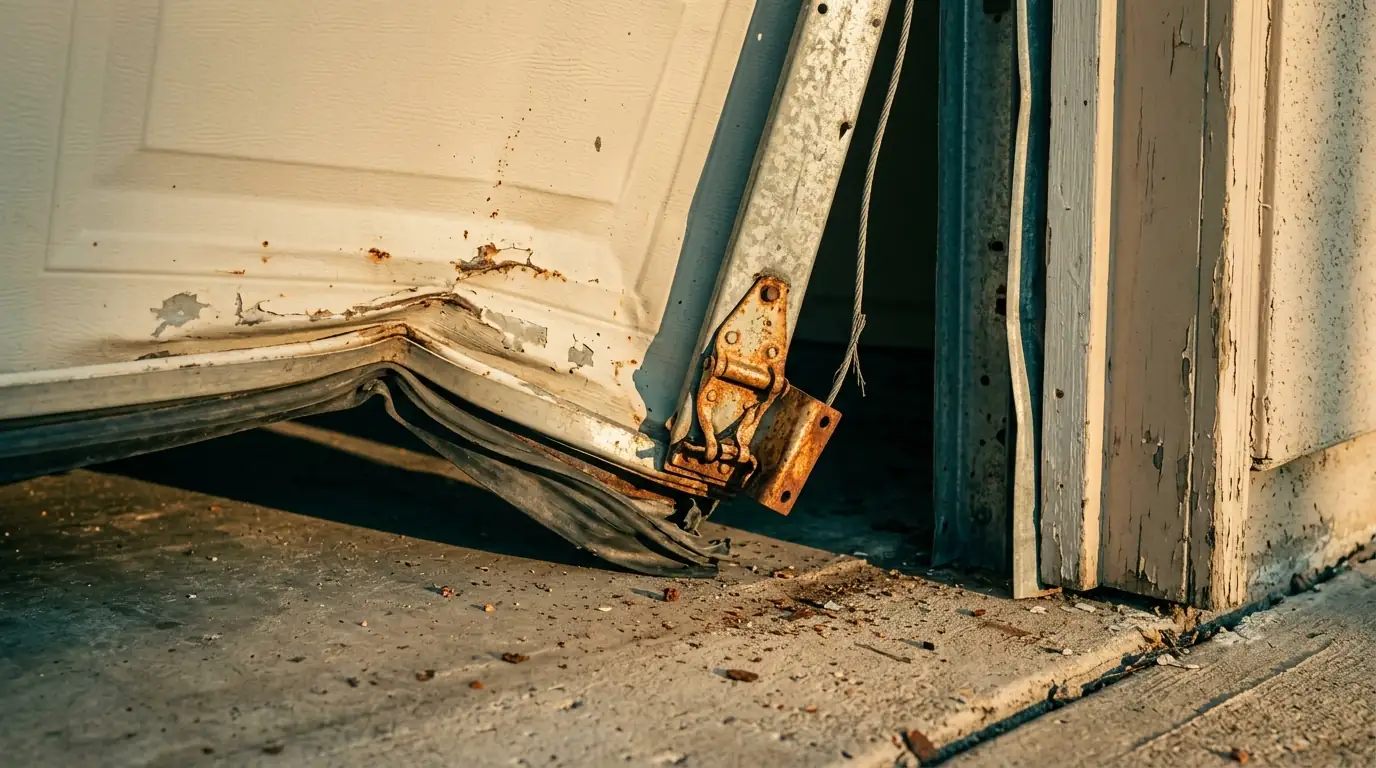
Door hanging off one track
One side high and one side low means a roller left its track or a cable came off its drum. Do not run the opener, because it will twist the door further. We clamp the door, relieve the tension safely, reset the cable and rollers, and straighten or replace the track section that let it go. Doors in this state are under uneven load, so we keep everyone clear and work from the side, never from underneath, until the tension is off and the door is level again.
How long an emergency visit takes
Securing a door usually takes well under an hour once we are on site. A full repair on the same visit depends on the part: a spring or cable is typically done in one visit when the size is on the truck, while a bent section or a new opener can mean making the door safe tonight and finishing once the part arrives.
What you can do safely while you wait
A few steps are safe for anyone. The rest involve stored spring tension, which is why we handle them.
| Task | Doing it yourself | Why we handle it |
|---|---|---|
| Unplug the opener | Safe, and it stops the motor from fighting a broken spring. | Nothing to add; do it first. |
| Pull the red release cord | Only with the door fully closed. | A door released while open can drop if a spring is broken. |
| Clear the area under the door | Safe and smart. | Keeps people and cars out of the fall zone. |
| Adjust or remove a spring | Not safe. | Springs hold enough tension to break bones. |
| Re-thread a cable on the drum | Not safe. | The cable is under spring load until the tension is let off. |
Why storm nights bring the most emergency calls
Houston's worst nights for garage doors tend to be the ones without power. When Hurricane Beryl knocked 2.26 million of CenterPoint's 2.6 million customers offline in July 2024, every garage without a battery backup opener had to be opened by hand, and a door with a weak spring is exactly the one that drops when someone pulls the release. We see the same pattern after smaller outages: the outage reveals a spring that was already worn.
What drives the cost of an emergency repair
Most emergency calls end up as one of a few repairs. As a national planning range, This Old House puts single-component repairs such as a spring, roller or cable at $98 to $300, and major component or opener repairs at $300 to $860 (2026). We price your door on site before work starts.
- 1
Which part failed. A cable costs less than a pair of torsion springs, and a bent section costs more than either.
- 2
Door size and weight. Double doors need larger springs and heavier hardware.
- 3
Whether the door needs securing first. Clamping and lowering a hanging door adds time before the repair starts.
- 4
Parts on hand. A common spring size can be fitted that night; a matching section may need ordering.
- 5
Damage from the failure. A door that dropped often needs hinges or a bottom bracket as well.
Questions about this job
Emergency garage door questions
If the door is closed and nobody needs the car, it can wait for a scheduled visit. If the door is stuck open, a car is trapped, or the door is hanging crooked, call us any hour.
Only when the door is fully closed. Pulled with the door open, a door with a broken spring can drop straight down.
Yes. If a part has to be ordered, we lower and lock the door or clamp it safely, then come back to finish the repair.
After-hours calls can be priced differently from daytime visits. We tell you the price on the phone or on site before any work starts.
Yes. A dock or bay door stuck open after closing is a security problem, and we take those calls the same way.
Do not run the opener. Keep people away from the door and call, because an off-track door can fall inward or outward.