Updated October 2026
Short answer
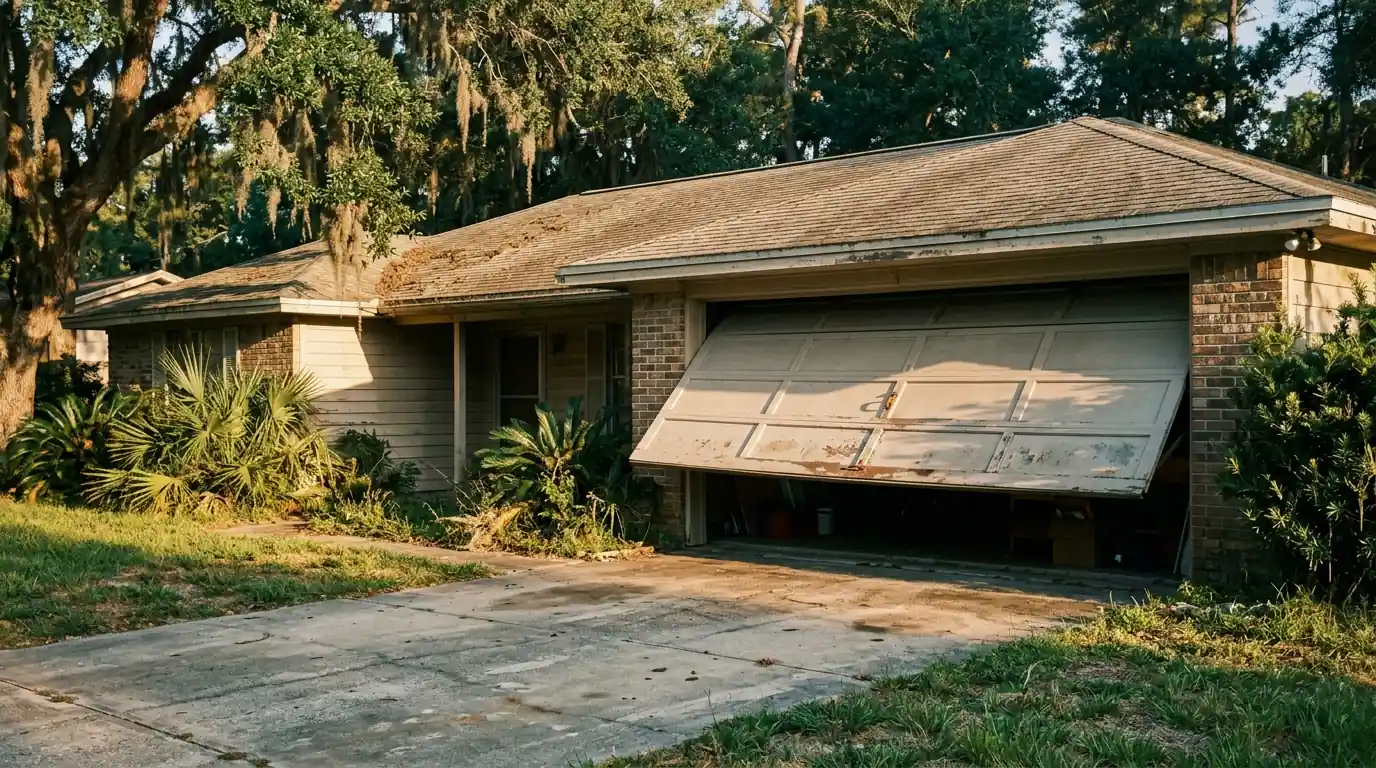
A one-piece garage door is a single slab that pivots up and out on hinge arms, balanced by springs on each side. In Houston they are mostly found on older homes, and the common failures are broken springs, bent pivot arms and worn hinge brackets. Parts are harder to find than for sectional doors, so a conversion is sometimes the better fix.
Signs a one-piece door needs repair
The door is very heavy to lift
A spring has broken or lost tension.
One side rises before the other
Uneven springs or a bent arm.
It sags or scrapes the frame
Loose brackets or a warped slab.
It stops part way open
Pivot hardware is binding.
Loud bangs as it swings
A spring or mount is close to failing.
How a one-piece door repair runs
Identify the type
Jamb-type or track-type, and how it is sprung.
Secure the door
Door supported before any tension is released.
Replace worn parts
Springs as a pair, arms and brackets as needed.
Even both sides
Arms and springs set so the door swings level.
Test and advise
Full cycles, and an honest word on conversion.
How a one-piece door differs
A one-piece door is a single rigid panel. When it opens, the bottom swings out past the face of the garage and the whole slab tilts up into the garage on pivot arms, with heavy springs on each side carrying the weight. There are two main types: jamb-type doors, with the hardware mounted on the door frame, and track-type doors, which use short horizontal tracks.
Because the bottom swings out, a car parked too close to the door blocks it, and because the springs and arms are under tension on both sides, a failure on one side twists the whole door. Repairs use different parts from a sectional door, which is why we ask on the phone which kind you have.
Broken one-piece door springs
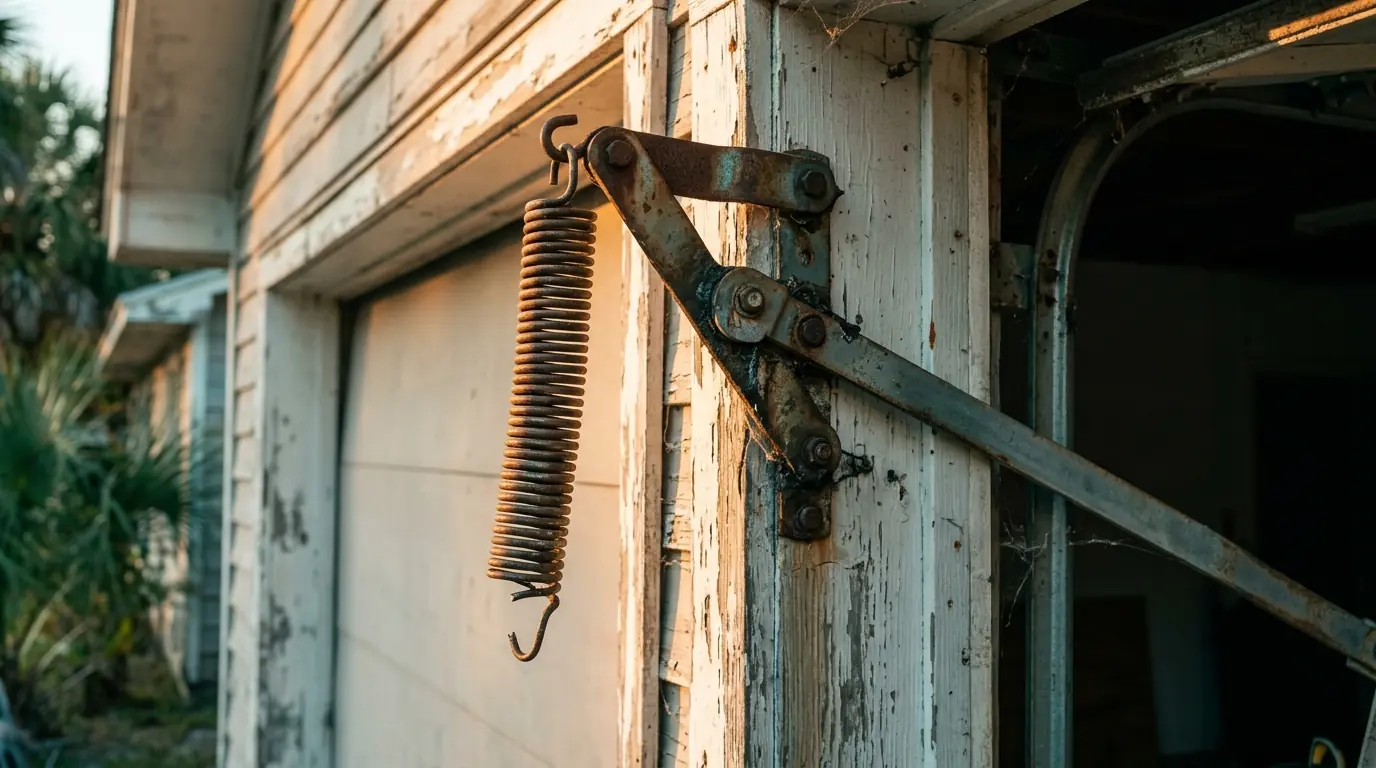
One-piece doors use large springs on each side, often hooked to a pivot arm or lever on the jamb. When one breaks, the door becomes far too heavy on that side and can twist or drop as it opens. Both springs are replaced as a matched pair, sized to the door's weight, and we check the hooks, eye bolts and adjustment points they hang from. On these doors a worn mounting point is just as likely to fail as the spring itself, so we replace anything bent.
Pivot hardware and tracks
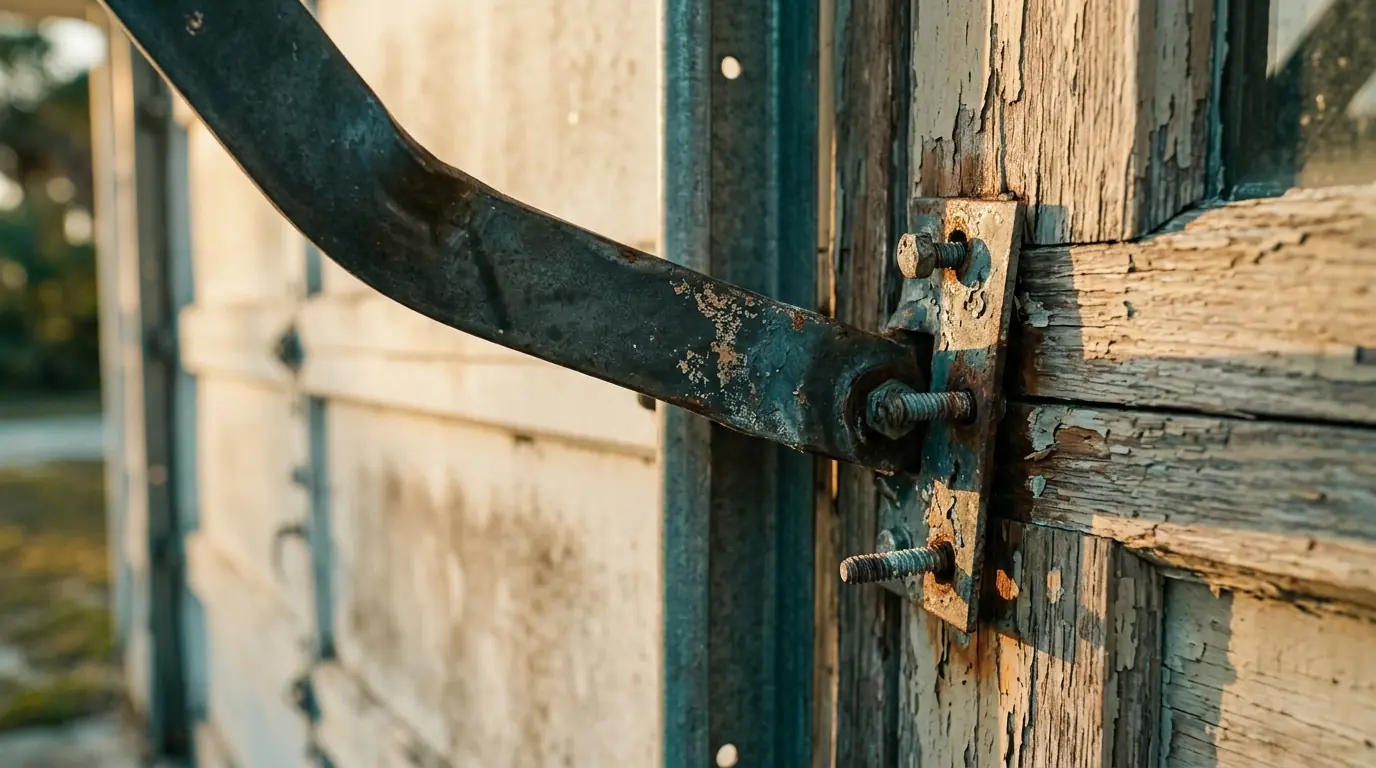
The pivot arms, hinge brackets and rollers carry the door through its swing. Over the years the brackets loosen from the jamb, the arms bend, and the short tracks on track-type doors wear. A door that binds, jerks or stops part way usually has one of these out of line. We tighten or replace the brackets, true or replace bent arms, and set both sides to move evenly, because an uneven one-piece door strains the springs and can pull itself out of the frame.
Converting to a sectional door
When springs, arms and brackets are all worn, or the slab itself is warped or rotted, replacing the door with a sectional one usually costs less over its life than keeping the old door going. A sectional door rolls straight up, so it does not swing out over the driveway, and it can take a standard opener with battery backup. We measure the opening and headroom and price both options before you choose, so the decision is yours. The old slab and its hardware are hauled away the same day.
What is safe on a one-piece door
One-piece doors carry very heavy springs on both sides, which makes most of their repairs unsafe for a homeowner.
| Task | Doing it yourself | Why we handle it |
|---|---|---|
| Keep the swing path clear | Safe. | The bottom swings out past the frame. |
| Lubricate the pivot points | Safe with the door closed. | Use a garage-door lubricant. |
| Replace a spring | Not safe. | Side springs are under heavy tension. |
| Adjust the pivot arms | Not safe. | They hold the spring load. |
| Remove the door yourself | Not safe. | The slab is heavy and loaded. |
Where one-piece doors still turn up
Most garage doors built in Houston over the last few decades are sectional, so one-piece doors are now mostly found on older homes and on garages that were never updated. Owners often call us when a part that has lasted for decades finally breaks. Because parts for some older one-piece designs are no longer made, we check what is available before quoting a repair.
What drives the cost of a one-piece repair
One-piece repairs are priced by the part that failed and how easily a replacement can be found.
- 1
Spring type and size. Matched pairs sized to a heavy slab.
- 2
Pivot arms and brackets. Bent or worn hardware adds parts.
- 3
Parts availability. Some older designs need substitutes.
- 4
Slab condition. Warped or rotted doors push toward replacement.
- 5
Conversion. A new sectional door is priced as a replacement.
Questions about this job
One-piece garage door questions
A single solid panel that tilts up and into the garage on pivot arms, instead of rolling up in sections.
Usually yes, though parts for some older designs are harder to find.
A spring has broken or lost tension. Stop using it and call.
If the slab is warped or rotted, or several parts are worn, converting often makes more sense.
Some can, but sectional doors take standard openers with battery backup more easily.
No. The side springs carry heavy tension.