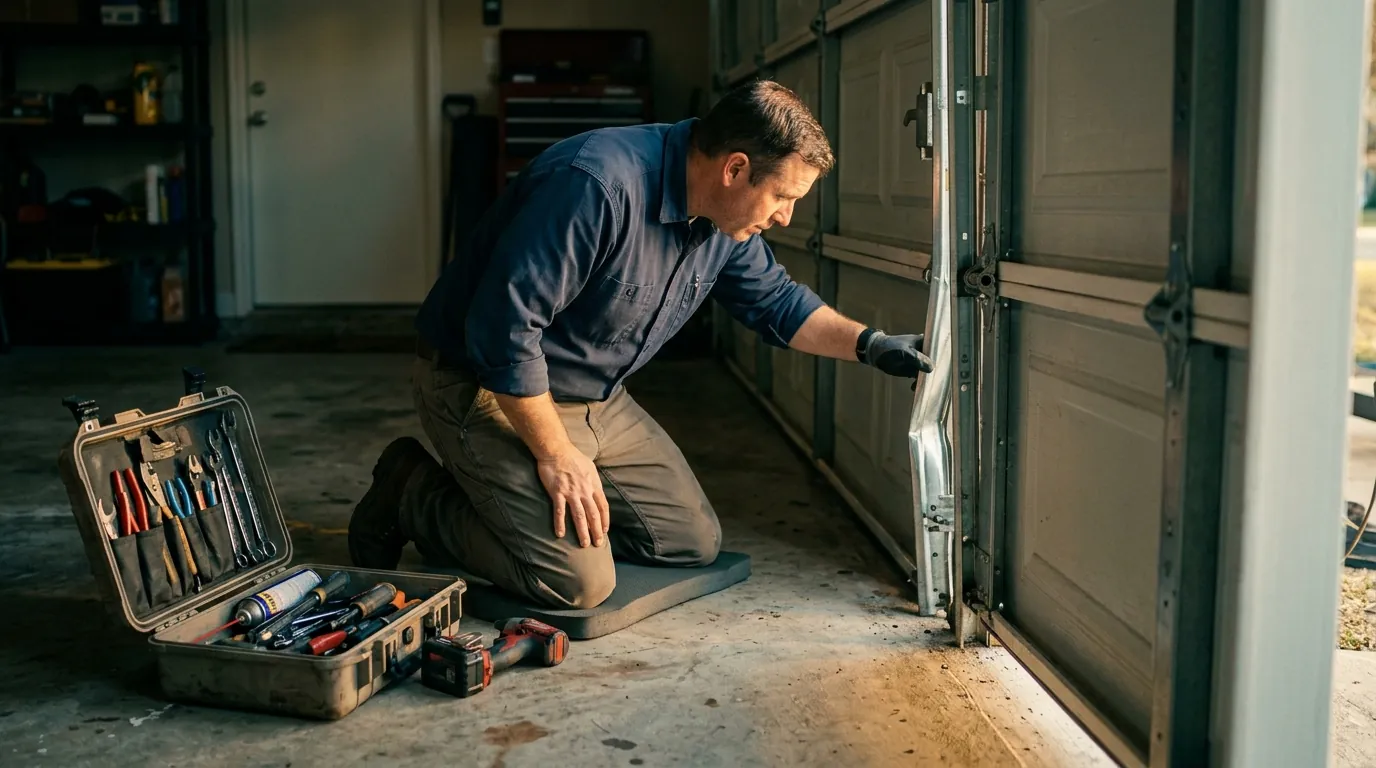
Updated October 2026
Short answer
Most Houston garage doors that reverse, jerk or grind have one worn part, not a worn-out door: a misaligned sensor, a dry or cracked roller, or a spring losing tension. A repair visit finds that part first, so you are not replacing hardware that still has years left.
Signs the door needs a repair visit
It reverses for no reason
Usually sensors, limits or the force setting.
It sounds worse than it used to
Grinding or popping means a part is wearing out.
It moves in jerks
Dry rollers or a bent track joint are common causes.
One side sits lower
A cable or drum problem that will get worse.
The opener strains
A spring losing tension makes the motor do the lifting.
How a repair visit runs
Describe the problem
What the door does, when it started and any noise you noticed.
Balance test by hand
We disconnect the opener and lift the door to check the springs.
Inspect the moving parts
Rollers, hinges, cables, drums, track and sensors, one by one.
Repair with your approval
You see the worn part and the price before we replace anything.
Test and adjust
Limits, force setting and the auto-reverse test, then full cycles.
Repair, not replacement, for most problem doors
A garage door is a balanced system: springs carry the weight, cables and drums transfer it, rollers ride the track, and the opener only guides the motion. When one part wears, the others start working harder, which is why a small noise left alone tends to become a bigger repair.
Our repair visits start with the door disconnected from the opener so we can feel the balance by hand. That one test separates a spring problem from an opener problem, and it decides most of what comes next. Doors from Clopay, Amarr, Wayne Dalton and the other common makers use standard parts, so most repairs are done on the first visit.
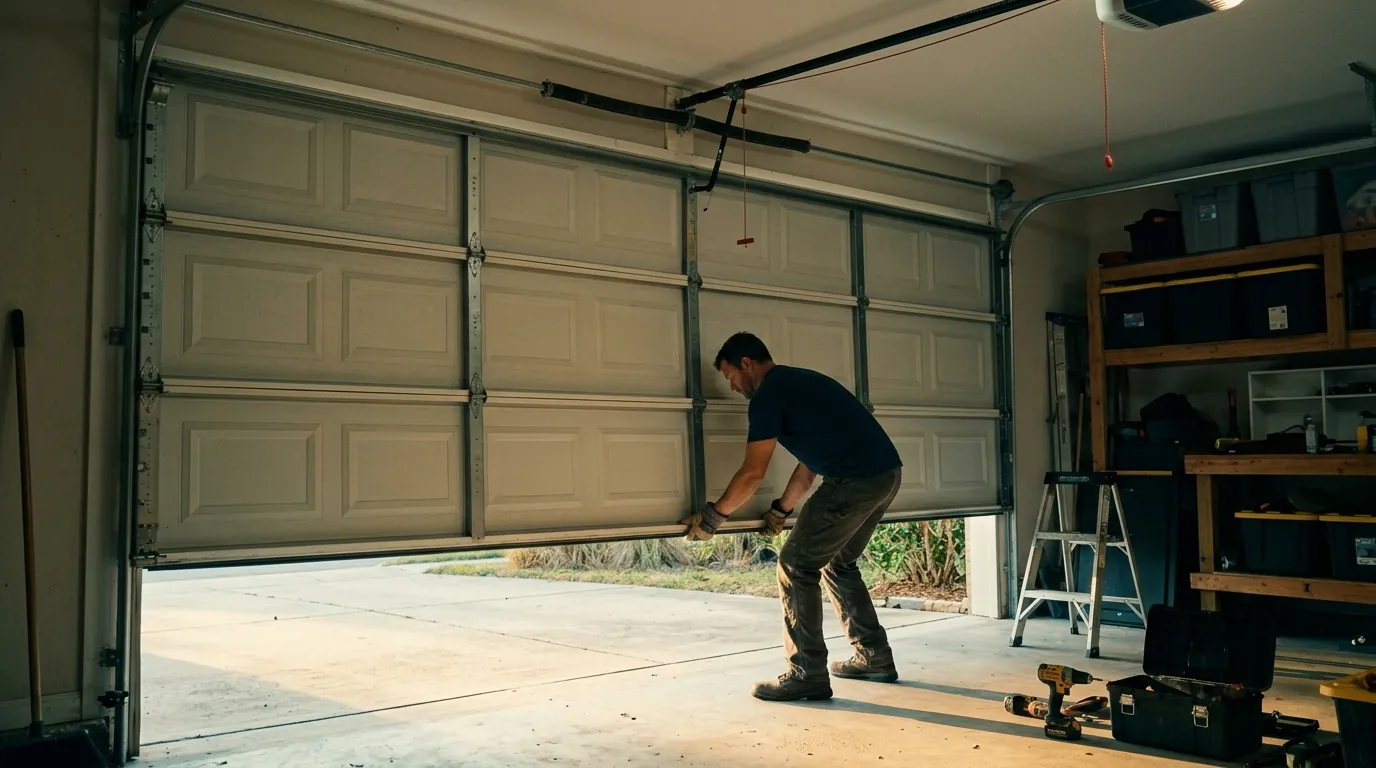
Door reverses before it closes
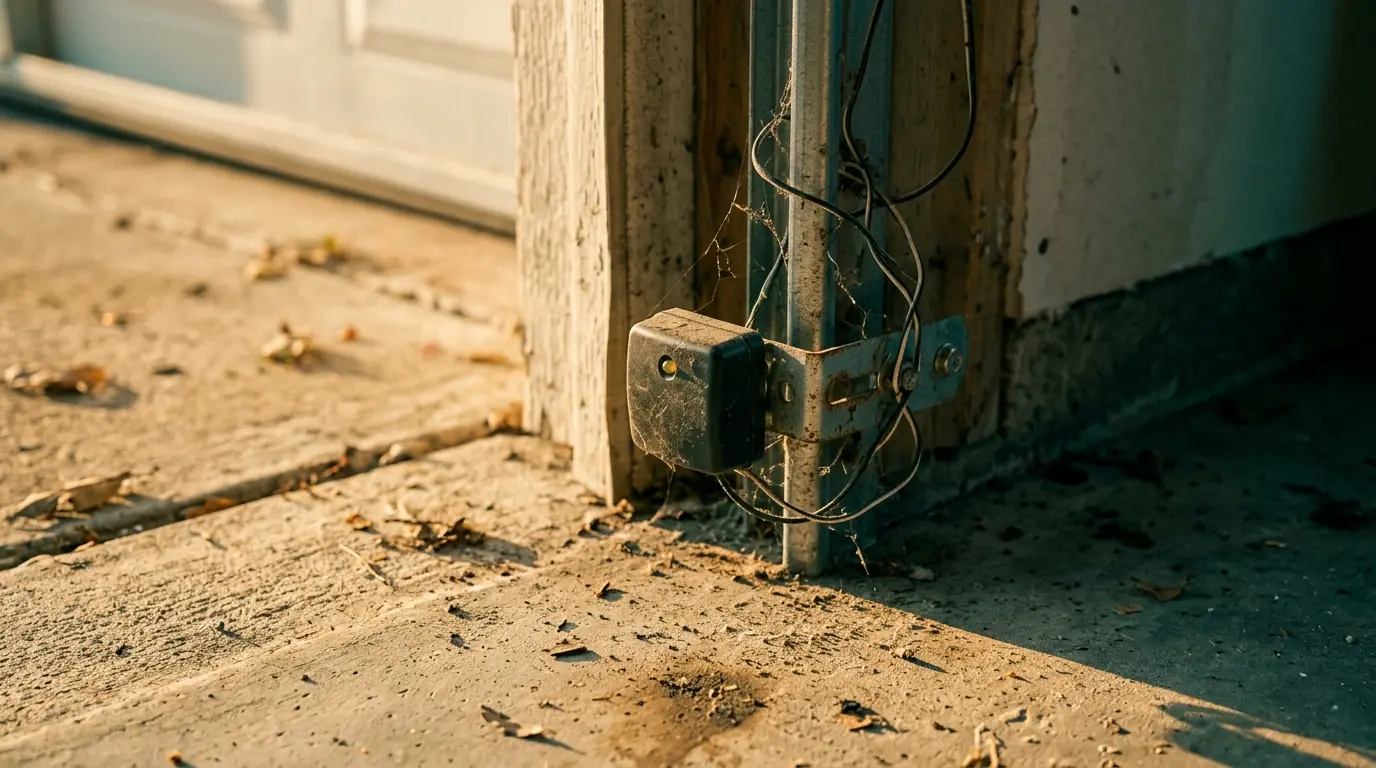
If the door touches down and pops back up, the close limit or the force setting is off. If it reverses partway down, look at the safety sensors first: a bumped bracket or a dirty lens breaks the beam. Fixing the limit or realigning the sensors takes minutes, but we also check the bottom seal, because a warped seal can make the door touch early. If the reversing started after a storm or a power cut, the opener's settings may simply have reset, which we check before replacing any parts.
Door jerks, shakes or binds
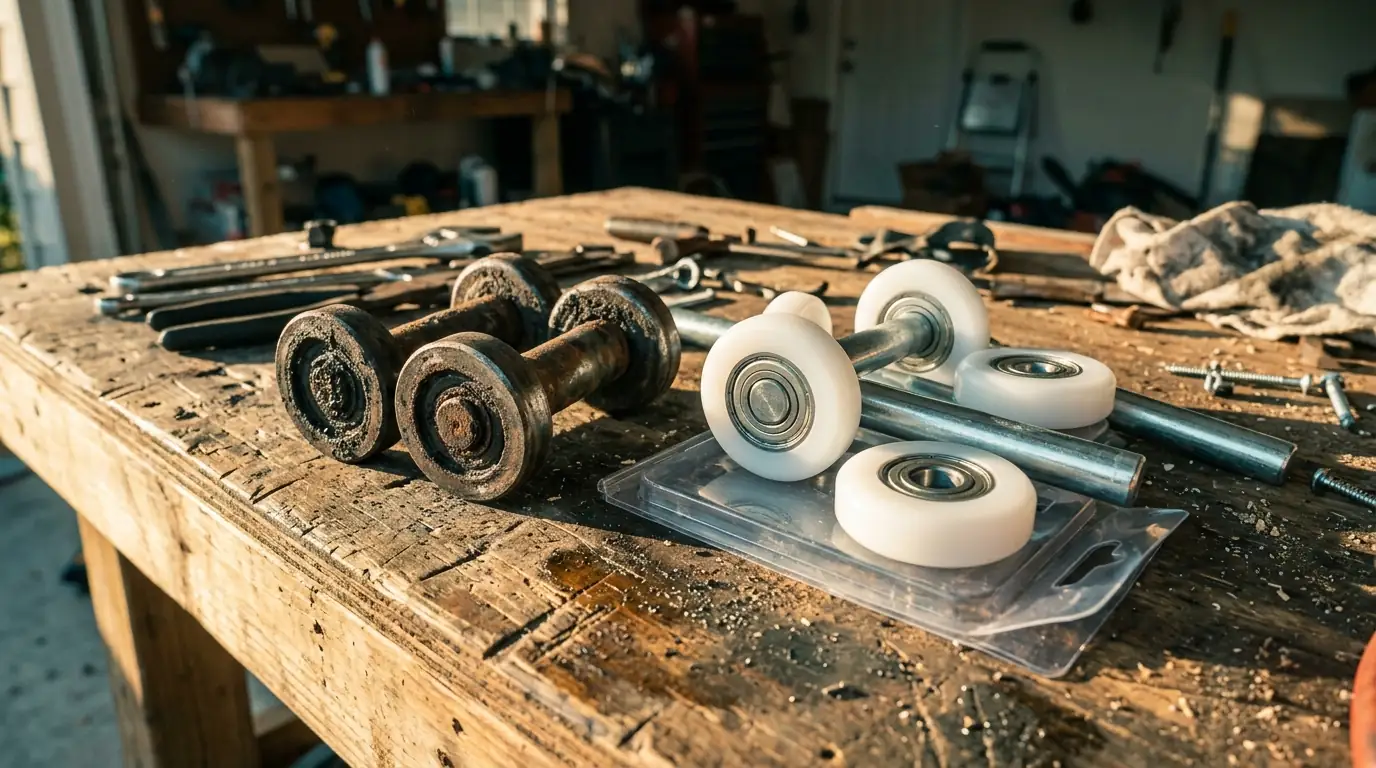
Jerky travel usually means dry or worn rollers, a bent track joint, or a hinge cracked at the fold. The door can also bind when a spring has lost tension and the opener is pulling harder than it should. We lubricate what should be oiled, replace what is cracked, and adjust the track so the rollers run without catching. We also listen for where in the travel the jerk happens, since a catch near the top points to the horizontal track and a catch near the floor points to the vertical track or the bottom rollers.
Grinding or popping noises
Metal on metal points to rollers with no bearings left or a track that has shifted. A pop at the same spot every cycle often comes from a hinge or a roller stem. We swap worn steel rollers for sealed nylon ones where the door allows, which also quiets a door that sits under a bedroom. A failing opener can grind too, so we run the door by hand with the opener disconnected; if the grinding stops, the noise was coming from the opener rather than the door hardware.
Door closes crooked
A gap under one corner usually means one cable has stretched or slipped on its drum, or one side of the track has moved. Left alone, the door keeps racking and stresses the hinges. We reset the cable, re-level the door, and check whether the slab itself is uneven, which a new bottom seal can take up. Left alone, a crooked door also wears one side's rollers and hinges faster than the other, so fixing it early keeps a cable job from turning into a hardware job.
What is fine to try first, and what is not
Some fixes are within reach of any homeowner. Anything that involves the springs, cables or drums is not.
| Task | Doing it yourself | Why we handle it |
|---|---|---|
| Wipe and realign the sensors | Fine to try. | If the light still blinks, the wiring or the sensor itself has failed. |
| Lubricate hinges and rollers | Fine with a garage-door lubricant. | Never grease the tracks; it collects grit. |
| Tighten loose hinge bolts | Fine on the upper sections. | The bottom bracket bolts hold cable tension, so leave those. |
| Adjust spring tension | Not safe. | Torsion springs store enough energy to cause serious injury. |
| Replace a cable | Not safe. | The cable is under load from the spring. |
Why so many repair calls come from the north side
Homes around our Theall Rd service office in northwest Houston have a median build year of 1982, and many still run the springs, rollers and hinges that came with a door installed decades ago or a replacement fitted during a later sale. That age shows up as exactly the faults on this page: tired springs that make the opener strain, steel rollers worn down to the stem, and cables that have stretched unevenly.
Brands we service and install
Most of the doors and openers we repair come from LiftMaster, Chamberlain, Genie, Clopay, Amarr and Wayne Dalton, and their parts are standard and widely available.
What a garage door repair usually costs
This Old House's 2026 guide puts single-component repairs at $98 to $300, multi-part or minor panel repairs at $245 to $300, and major component or opener repairs at $300 to $860. Inch Calculator puts the average repair near $300. These are national planning ranges, not our prices; we price your door on site.
- 1
The part that failed. Rollers and sensor fixes sit at the low end; springs and openers higher.
- 2
How many parts are worn. One cracked hinge is quick; a full set of rollers and hinges is a longer visit.
- 3
Door size. Double doors use more hardware and heavier springs.
- 4
Track condition. Straightening is cheaper than replacing a bent section of track.
- 5
Opener involvement. If the opener has been straining against a bad spring, its gear may need replacing too.
Questions about this job
Garage door repair questions
The close limit, the force setting or the sensors are the usual causes. A warped bottom seal or an uneven slab can also make the door touch down early and reverse.
Often, yes. Grinding usually means worn rollers or a shifted track, and new nylon rollers fix both the noise and the wear.
We work on the common residential brands, including Clopay, Amarr and Wayne Dalton doors and LiftMaster, Chamberlain and Genie openers.
If the sections are sound, a repair is usually the better value. Replacement makes sense when sections are rusted through, cracked in several places or no longer made.
Most single-part repairs take under two hours on site, including the testing at the end.
Yes, sectional and rolling steel doors on shops, warehouses and docks.