Updated October 2026
Short answer
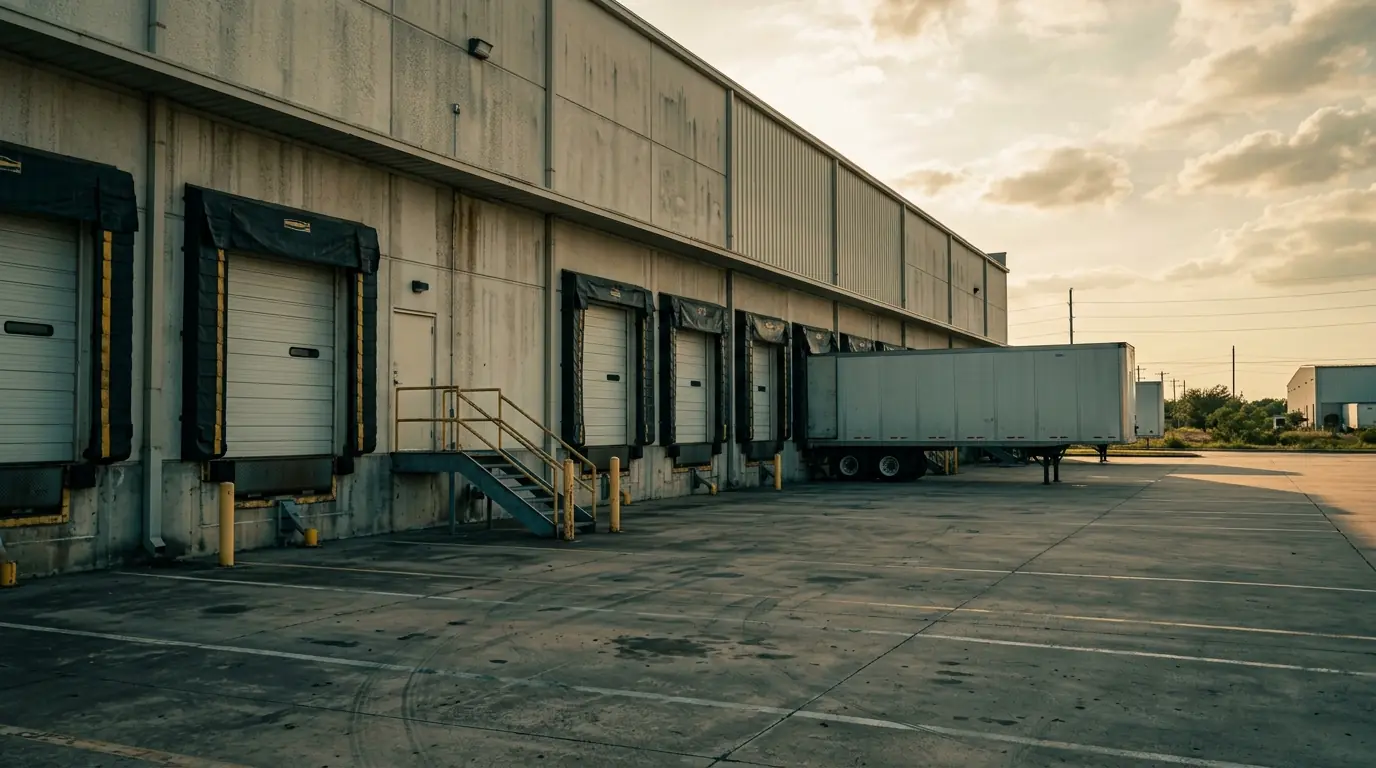
Loading dock equipment in Houston, meaning levelers, seals, shelters and bumpers, wears fastest on busy docks where trucks back in all day. A leveler that will not raise or lower, a torn seal or a crushed bumper are the common failures, and each affects how well the dock door seals and how safely trucks load.
Signs dock equipment needs repair
The leveler will not stay down
Hold-down springs or hydraulics.
The lip will not extend
Lip mechanism or hinge wear.
Light around a parked truck
Worn or torn seals.
Bumpers worn to the bolts
Trucks will hit the dock face.
Water pooling at the door
Seals are not closing the gap.
How a dock repair runs
Make the dock safe
Leveler secured, door closed or locked out.
Inspect
Leveler, seals, bumpers and door.
Quote
Repairs and parts priced before work.
Repair
Leveler parts, seals and bumpers replaced.
Test
Leveler cycled and door operation checked.
Dock equipment that works with the door
A loading dock is a system: the overhead door, the leveler that bridges the gap to the truck bed, the seal or shelter that closes the gap around the truck, and the bumpers that stop the truck hitting the building. When one fails, the others take the strain.
We repair dock equipment alongside the dock doors, which means one visit can cover the door, the leveler and the seal.
Dock levelers
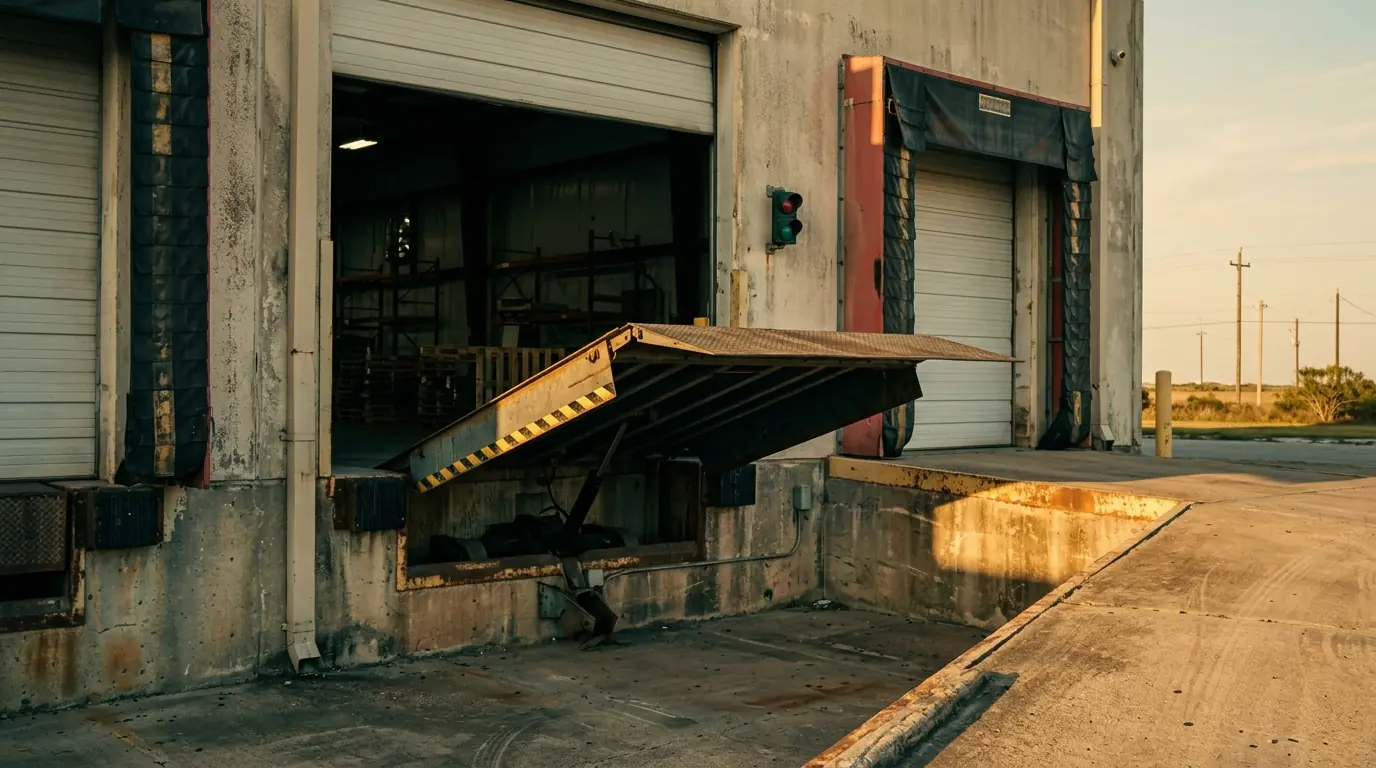
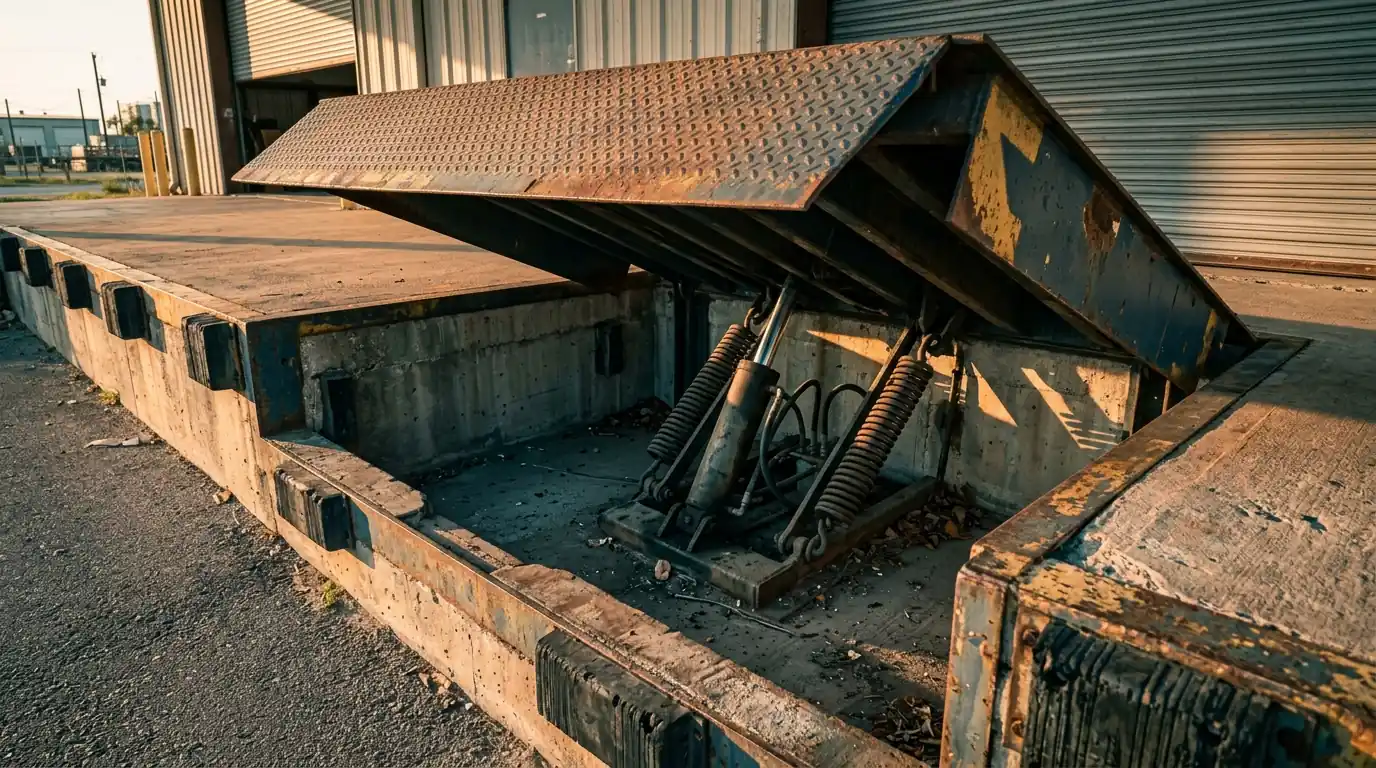
Mechanical levelers use springs and a pull chain; hydraulic levelers use a pump and cylinders. Common failures include weak hold-down springs, lips that will not extend, leaking hydraulics and worn hinges. A leveler that will not stay down or will not raise stops loading at that door. We repair springs, cylinders, lips and hinges, adjust the leveler to sit flush, and check the safety legs and toe guards that protect workers, because those are what stop a leveler dropping under a forklift.
Dock seals and shelters
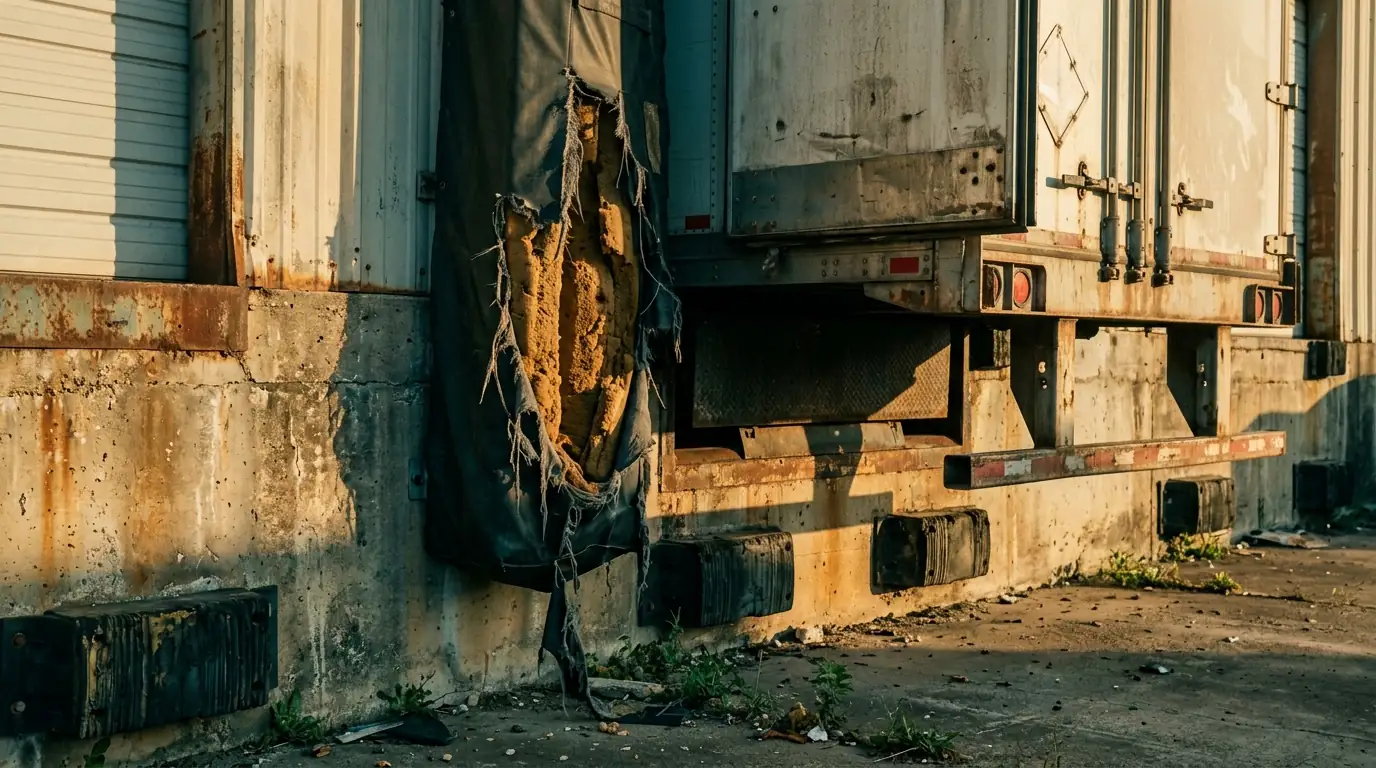
Dock seals are foam pads that compress against a truck to close the gap; shelters are fabric curtains that wrap around the trailer. Both tear and flatten with use. A worn seal lets rain, heat and pests into the building and wastes the insulation in the dock door. We replace pads, curtains and head curtains, and size them to the trucks you actually load, so the seal closes around the trailers rather than leaving gaps at the corners. Head curtains are checked for tears at the same time.
Dock bumpers
Bumpers absorb the impact of trucks backing in. Once worn or torn off, trucks hit the dock face and the leveler, damaging both. Rubber and laminated bumpers wear gradually; steel-faced bumpers last longer on busy docks. We replace worn bumpers and check the dock face and leveler lip for impact damage at the same time, since bumper wear is usually the first sign that trucks are hitting harder than the dock was built for. Bumpers are bolted into the dock face with new anchors.
Dock wear on the northwest side
The industrial parks near our Theall Rd office are built for warehouse, distribution and contractor use, with listings pointing to the airport about 15 miles away and the Port of Houston about 29 miles away. Docks that serve that kind of traffic see trucks backing in all day, so leveler springs, seals and bumpers wear quickly, and they are the dock repairs we are called for most often on the northwest side.
What drives the cost of dock repairs
Dock repairs are priced by the equipment and the part that failed.
- 1
Leveler type. Hydraulic repairs cost more than spring adjustments.
- 2
Part replaced. Lips, cylinders and hinges differ widely.
- 3
Seal or shelter size. Priced to the dock opening.
- 4
Bumper type. Steel-faced bumpers cost more and last longer.
- 5
Number of docks. Several docks on one visit lower the per-dock cost.
Questions about this job
Loading dock equipment questions
Yes, including cylinders, hoses, pumps and lips.
Yes, including springs, hold-downs and pull-chain mechanisms.
Yes, foam seals and fabric shelters, sized to the trailers you load.
Busy docks and hard backing wear them quickly; steel-faced bumpers last longer.
Yes. We repair dock doors and dock equipment together.
Yes, and a multi-dock visit is usually more efficient.