Updated October 2026
Short answer
A wall-mount garage door opener in Houston mounts beside the door and turns the torsion shaft directly, so there is no rail across the ceiling. It needs a door on torsion springs and a few inches of side room, and it typically costs more than a standard trolley opener.
How a wall-mount opener works
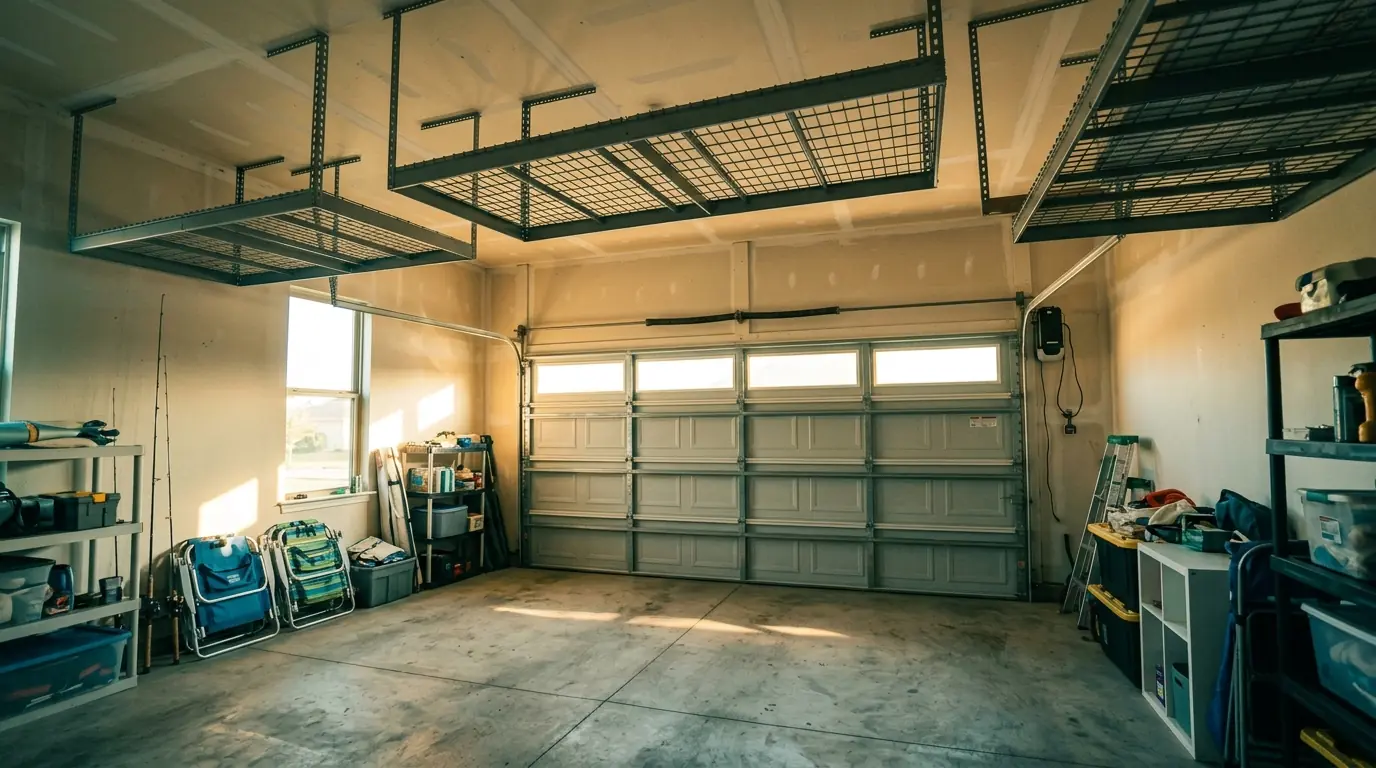
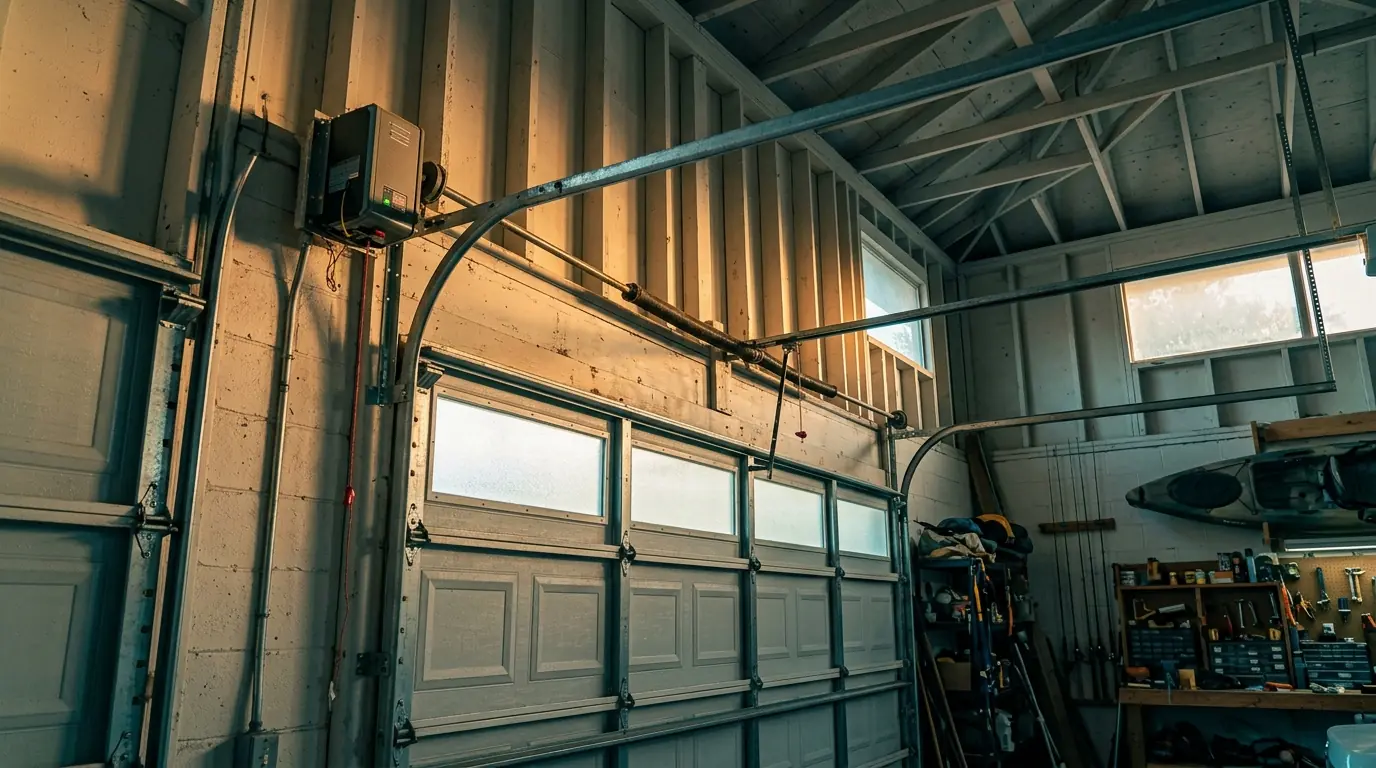
Standard openers hang from the ceiling and pull the door along a rail. A wall-mount opener, often called a jackshaft opener, mounts on the wall at the end of the torsion shaft and turns that shaft to lift the door, much like the spring does. Nothing hangs in the middle of the garage.
That frees the ceiling for overhead storage racks, a car lift or a high-lift track that runs the door up the wall. Wall-mount units are also quiet, because the motor sits on the wall rather than on the ceiling over a bedroom.
What a wall-mount install includes
- Confirming torsion springs and side room
- Balance test and spring adjustment
- Mounting the opener on the torsion shaft
- Cable tension monitor and automatic lock
- Safety sensors and wiring
- Wall control, keypad and remotes
- Battery backup setup where fitted
- Force, limit and auto-reverse testing
What drives the cost of a wall-mount opener
Wall-mount units cost more than standard trolley openers, and the install price depends mostly on what the door needs before the opener can go on.
- 1
Spring system. Extension-spring doors need a torsion conversion first.
- 2
Model and features. Battery backup, camera and app models cost more.
- 3
Electrical. An outlet beside the door may need adding.
- 4
High-lift track. Converting the track is a separate job.
- 5
Door weight. Heavier doors need a stronger unit.
High-lift tracks and tall ceilings
In garages with high ceilings, a high-lift track runs the door up the wall before it turns back, so the open door sits high and out of the way. A ceiling opener cannot drive that kind of track well. A wall-mount opener turns the shaft no matter how the track is laid out, which makes it the standard choice for high-lift conversions and very tall doors, and we size the unit to the door's weight before ordering. High-lift doors also need springs sized for the extra travel, which we account for before ordering.
Garages with overhead storage
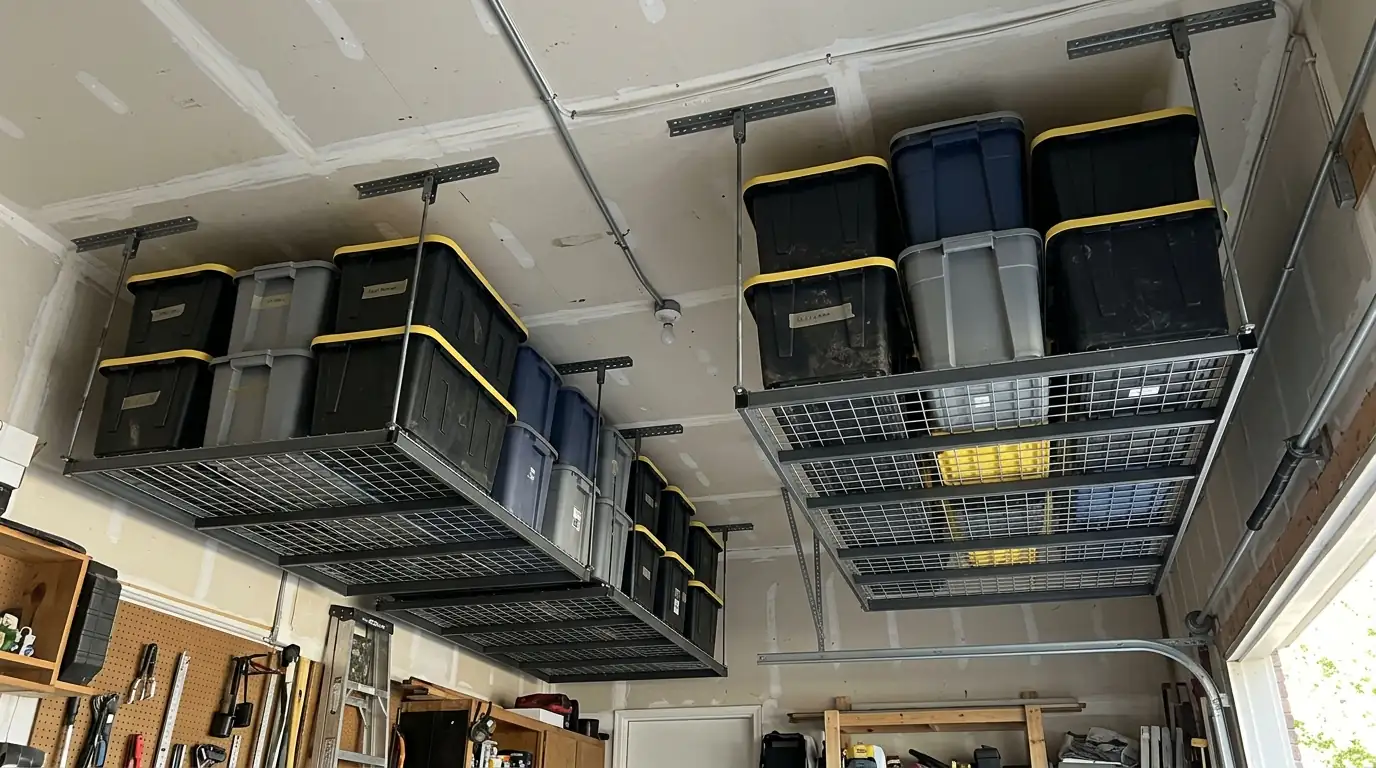
Overhead storage racks and ceiling-mounted bike hoists compete with a standard opener for the middle of the ceiling. Moving the opener to the wall clears that space entirely. Owners who add a car lift for a second vehicle need the ceiling clear for the same reason. We measure the ceiling, the door's open position and the rack plans together so nothing collides once the door is up. We also check that the ceiling joists and rack anchors are clear of the door's travel path, because a rack hung too low will catch the top section on the way up and damage both the door and the rack.
What the door needs first
A wall-mount opener only works on a door with torsion springs and a solid torsion shaft, and it needs a few inches of side room beside the door and an outlet nearby. Doors on extension springs need a torsion conversion first. Most units also need a cable tension monitor and a door lock, which we fit as part of the installation, and we balance the door before mounting anything. If the door needs any of these, we price them alongside the opener so the quote you see is the whole job, not a figure that grows on installation day.
How a wall-mount install runs
Measure and check
Torsion springs, side room, outlet and ceiling plans.
Balance the door
Springs adjusted so the opener is not doing the lifting.
Mount the opener
Unit fitted to the shaft, cable monitor and lock installed.
Wire and program
Sensors, wall control, keypad, remotes and app.
Test
Force, limits, lock, auto-reverse and backup.
Newer homes and wall-mount openers
Fort Bend County grew from 354,452 residents in 2000 to 822,779 in 2020, and Montgomery County from 293,768 to 620,443, so a large share of the homes around Houston were built in the last two decades. Newer garages are more likely to have torsion springs on the door, which a wall-mount opener needs, and owners there often want the ceiling for storage, which is why most of our wall-mount calls come from those growth areas.
How long the install takes
A wall-mount install on a door that already has torsion springs usually takes a few hours. A door that needs a torsion conversion first, or an outlet added beside the door, takes longer, and we tell you that before we schedule.
Brands we service and install
LiftMaster's wall-mount models are the ones we install most, along with the Chamberlain and Genie units that suit the door.
Questions about this job
Wall-mount opener questions
A wall-mount opener that turns the door's torsion shaft from the side instead of pulling the door along a ceiling rail.
Only doors with torsion springs and enough side room. Extension-spring doors need a conversion first.
Generally yes, because the motor sits on the wall and there is no chain or belt over the ceiling.
Yes, they are the usual choice for high-lift and tall doors.
Many current models do. We fit and test it during installation.
Without a trolley arm holding the door down, the automatic lock keeps the door from being lifted from outside.