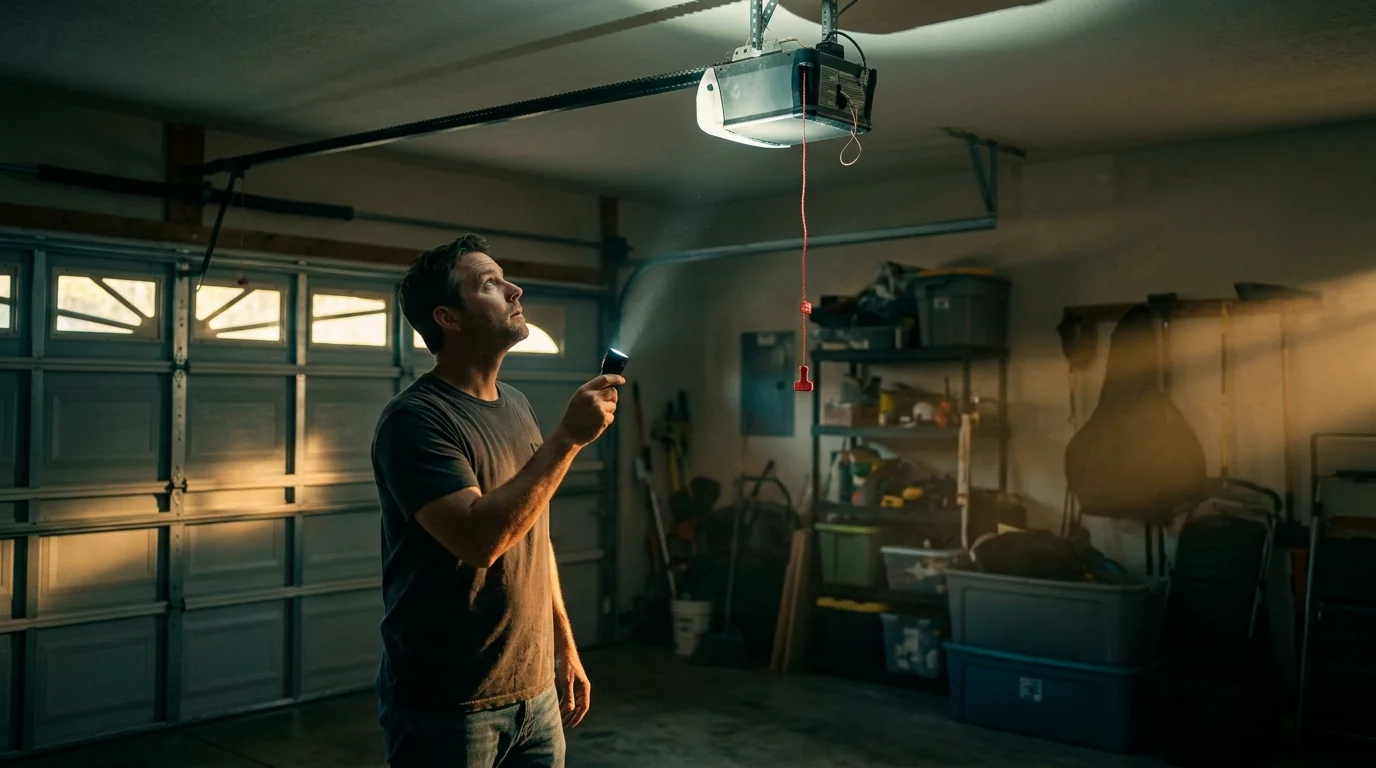
By Ernest Mabry, Garage Door Guides Editor
Updated October 2026
Short answer
When a garage door won't close, the safety sensors are the most common cause: something blocks the beam, a bracket has been bumped out of line, or low sun is blinding the receiver. Check that both sensor lights are steady, clear anything near the floor, and if the door still reverses, the opener's limits or a part of the door itself is the next suspect.
Start with the safety sensors
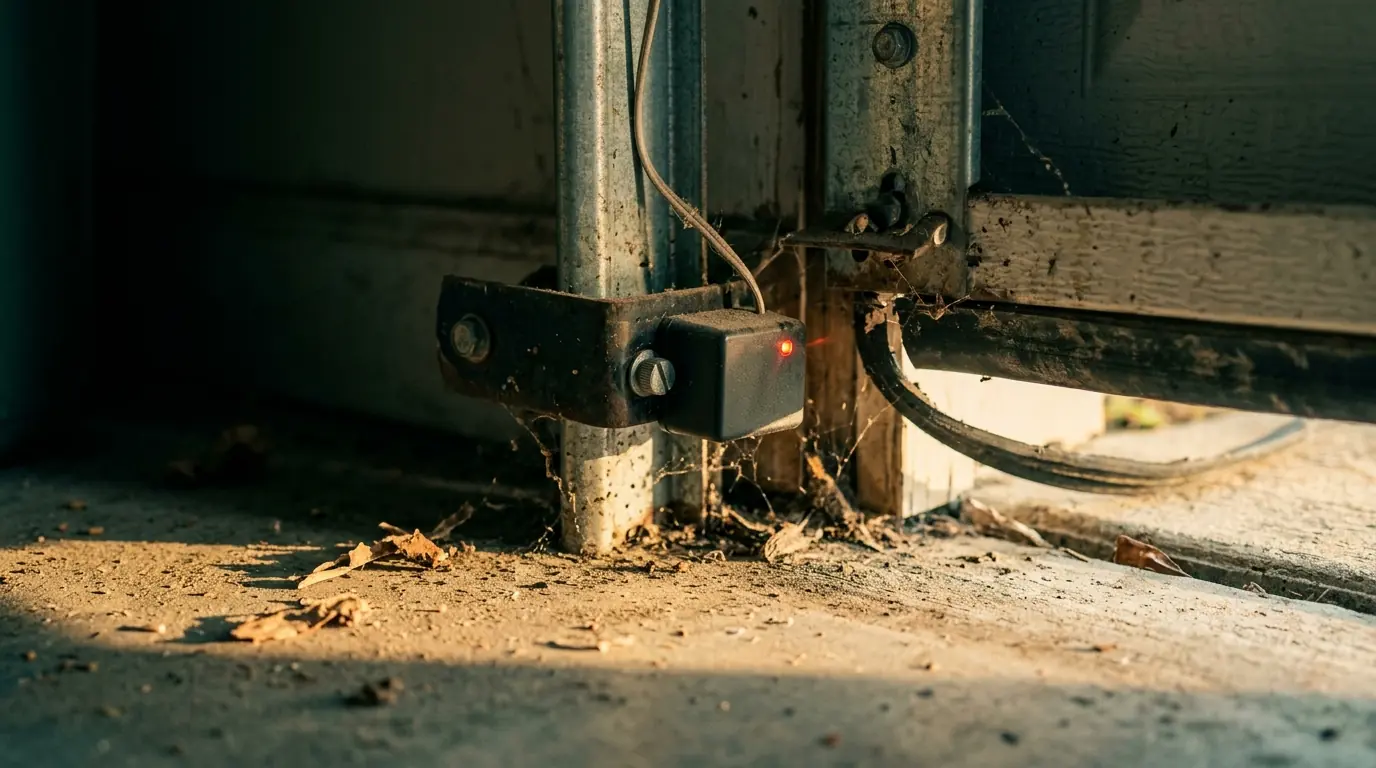
The two small sensors a few inches above the floor on each side of the door must see each other's beam before the opener will close the door. If anything breaks the beam, the door reverses. Look at both sensors: most have a small light, and both should be steady.
If one light is off or blinking, the sensors are out of line. Loosen the bracket, aim the sensors at each other until both lights are steady, and tighten it. Wipe the lenses while you are there. The sensor repair page covers wiring faults and replacements.
Check for sun glare at the same time of day
A door that closes every morning and refuses every evening is often being beaten by the sun. Low afternoon sun shining straight into the receiving sensor blinds it. Swapping the sensors side to side, so the receiver faces away from the sun, or fitting a small shade usually fixes it.
Houston's long, bright afternoons make this a common call on west-facing driveways.
Door stuck open and you cannot fix it? Call any hour.
Look at the wall control and remotes
Many wall controls have a lock or vacation button that disables the remotes. If the wall button works but the remotes do not, check whether the lock light is on. A dead battery in the remote does the same thing.
If the door closes only while you hold the wall button down, the opener is overriding a sensor fault, which tells you the sensors need attention.
Check the travel limits and force
If the door touches the floor and pops back up, the close limit or force setting has drifted, or something has changed under the door, such as a warped bottom seal or a raised slab. Openers have adjustments for both, and the manual explains them.
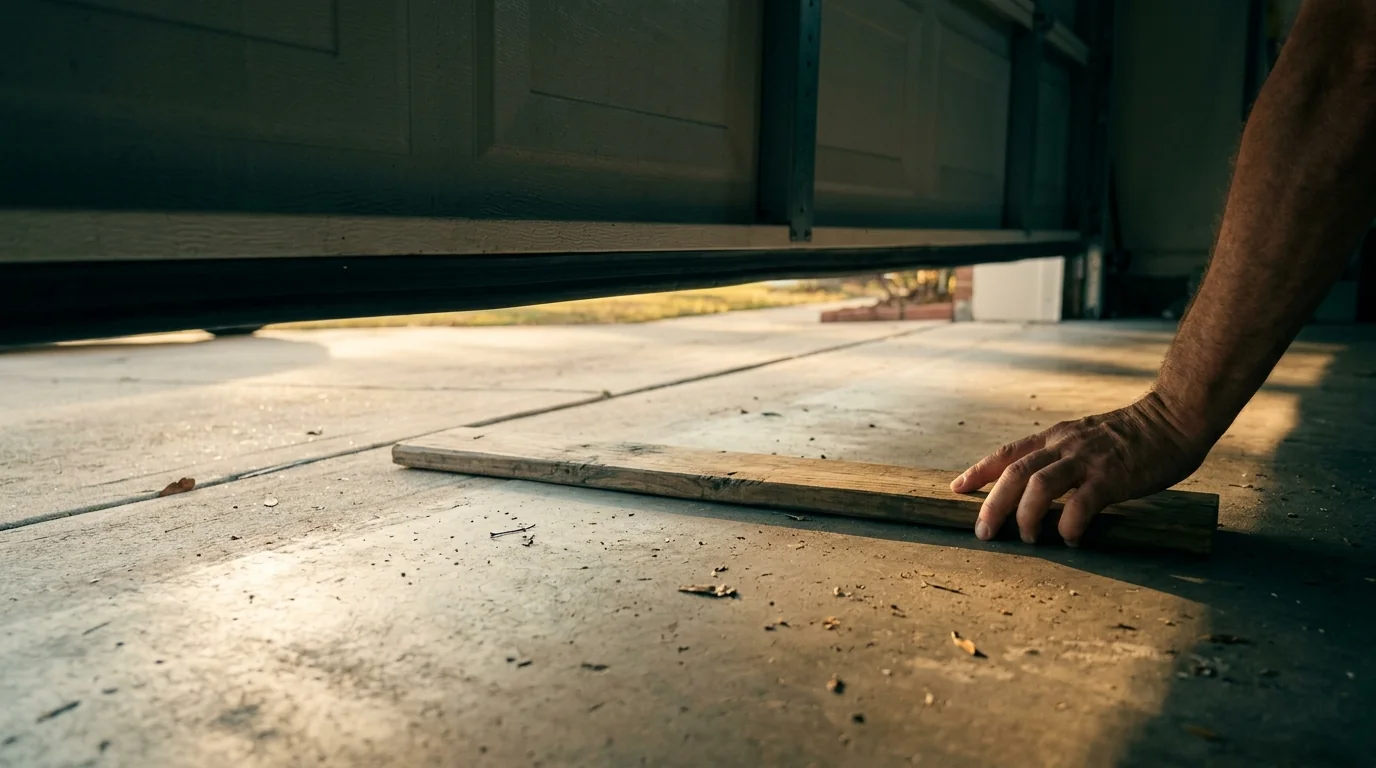
Be careful: setting the force too high can stop the auto-reverse working. After any adjustment, test the reverse by closing the door on a piece of wood lying flat on the floor; the door must reverse when it touches it.
When it is the door, not the opener
If the door binds, shakes or stops at the same spot, the problem may be the door: a bent track, a worn roller or a cable that has slipped. Doors with a broken spring are often too heavy for the opener to control. Those are not do-it-yourself jobs; the garage door repair page explains what we check.
One quick test helps: with the door fully closed, pull the release and lift it by hand. If it is very heavy, a spring has gone.
When to stop and call
Stop if a cable is loose or frayed, if rollers are out of the track, if the door hangs crooked, or if you heard a loud bang. Unplug the opener, keep clear of the door and call. Those failures involve parts under spring tension.
If the door is stuck open at night and you cannot secure it, call any hour. We bring it down under control and lock it, then fix the cause.
Questions readers ask
Garage door won't close questions
The close limit or force setting has drifted, or the bottom seal or slab has changed. Adjust the limit, then test the auto-reverse.
Usually the safety sensors: a blocked beam, a bumped bracket or sun glare.
Both sensor lights should be steady. A blinking or dark light means they are out of line or have a wiring fault.
The opener is overriding a sensor fault. The sensors need realigning or repair.
No. They are the main safety device that stops the door closing on people, pets and cars.
Call. We answer around the clock and can secure the door, then repair the cause.