By Ernest Mabry, Garage Door Guides Editor
Updated October 2026
Short answer
Houston's relative humidity runs above 90 percent most mornings, so the bare steel on a garage door stays damp for hours. Rust shows up first on springs, lift cables and the bottom brackets where the cables anchor, and rust on those parts is a safety issue, not just a cosmetic one.
Why Houston garages rust
The average relative humidity at Bush Intercontinental ranges from over 90 percent in the morning to around 60 percent in the afternoon. A garage that is closed most of the day holds that moisture, and bare steel parts go through a damp-dry cycle almost every day.
Storms add standing water near the bottom of the door, and floods leave silt in the tracks, both of which speed up rust at floor level.
The bottom brackets
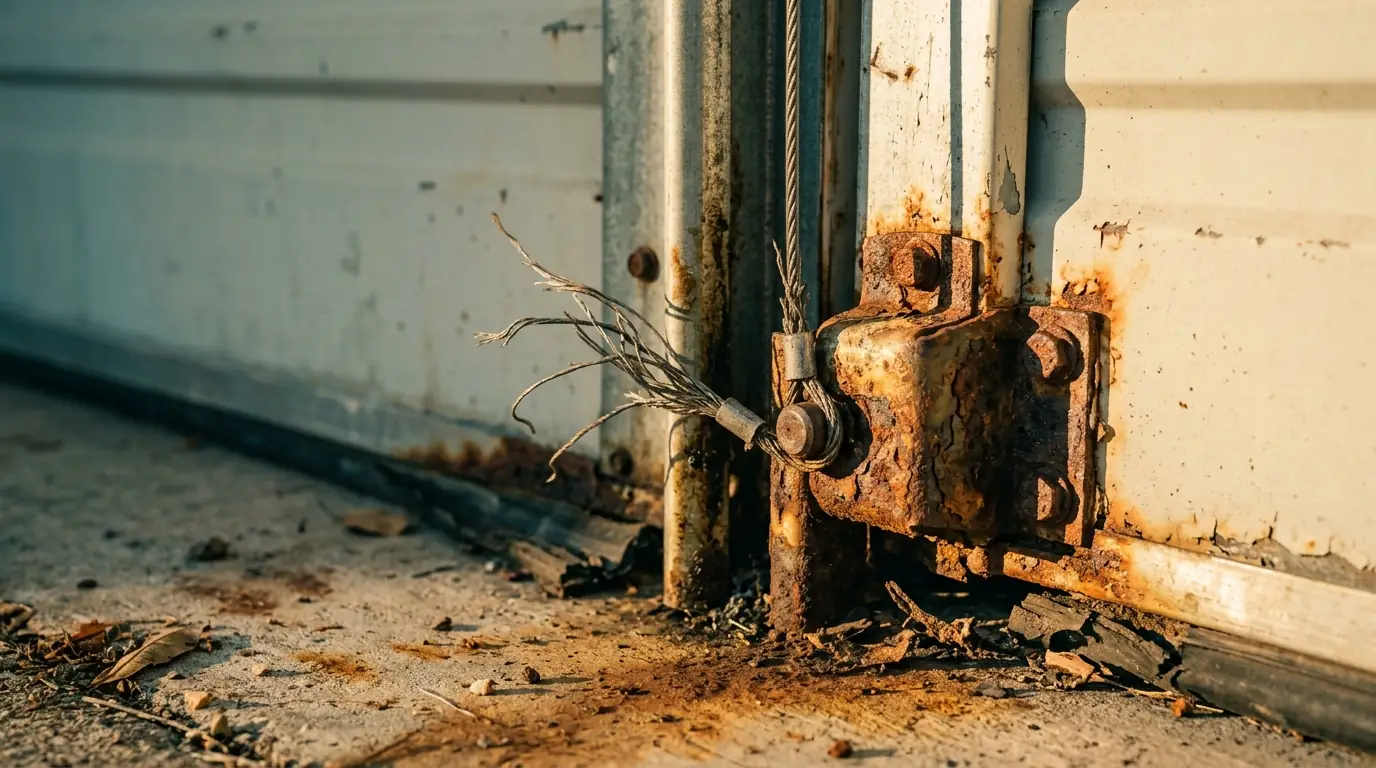
The bottom brackets sit at the lower corners of the door, where the lift cables attach. They are at floor level, where water collects and dries slowly, so they rust first. A rusted bracket can let go under the full force of the spring, dropping that side of the door. The cable repair page covers replacement.
Do not loosen or tighten the bottom bracket bolts yourself. They hold the spring's lifting force.
Lift cables
Cables rust where they sit damp and wear where they rub, usually near the bottom bracket and where they leave the drum. Once strands start breaking, a cable can snap under load. Look for broken strands, a rough or swollen surface and orange staining.
Cables are always replaced in pairs, because both have had the same exposure.
Frayed cable or flaking bracket? Stop using the door and call any hour.
Springs
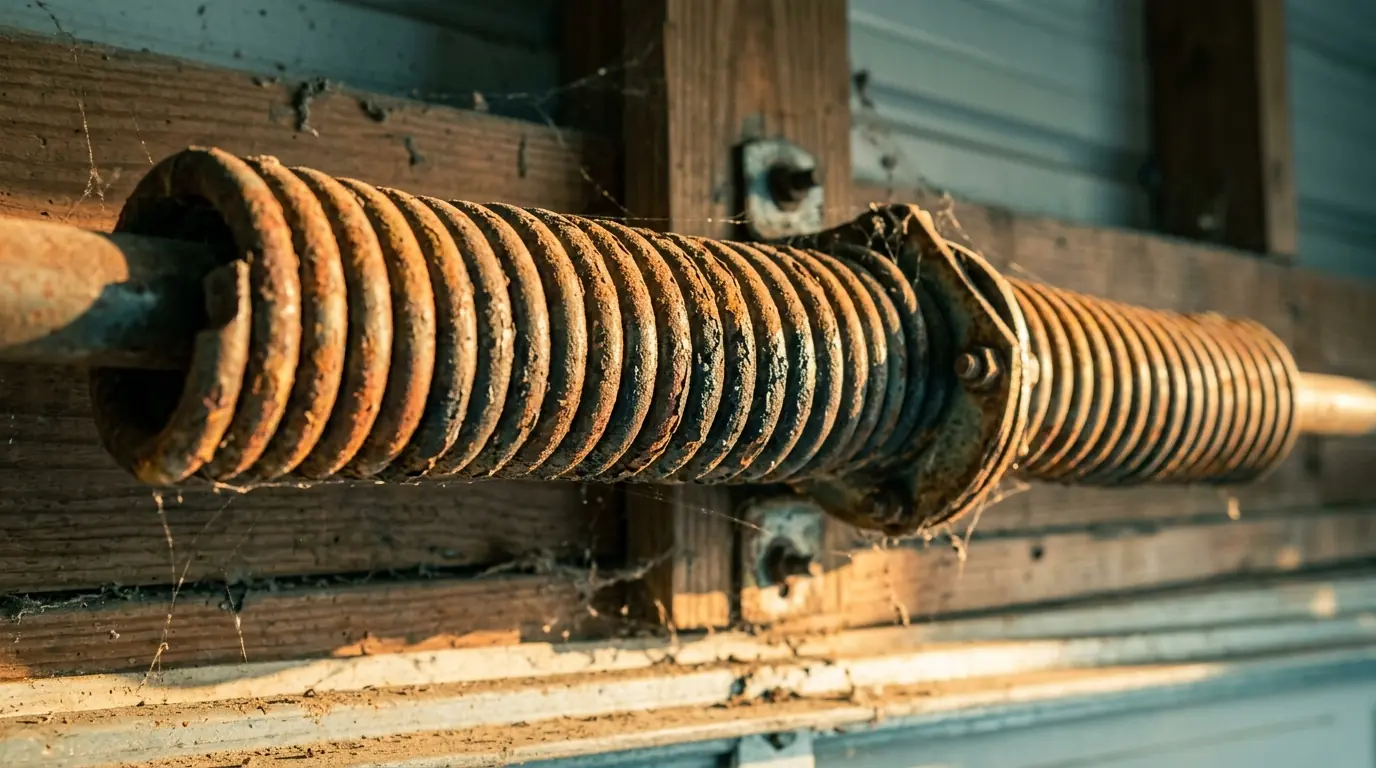
Torsion and extension springs are bare or lightly coated steel. Rust on the coils adds friction and pits the wire, and pits are where cracks start, so a rusted spring tends to break sooner than its cycle rating suggests. Oiling the coils during a yearly tune-up slows this down. The spring replacement page explains the job when one does break.
Never try to clean or adjust a spring under tension.
Rollers, hinges and tracks
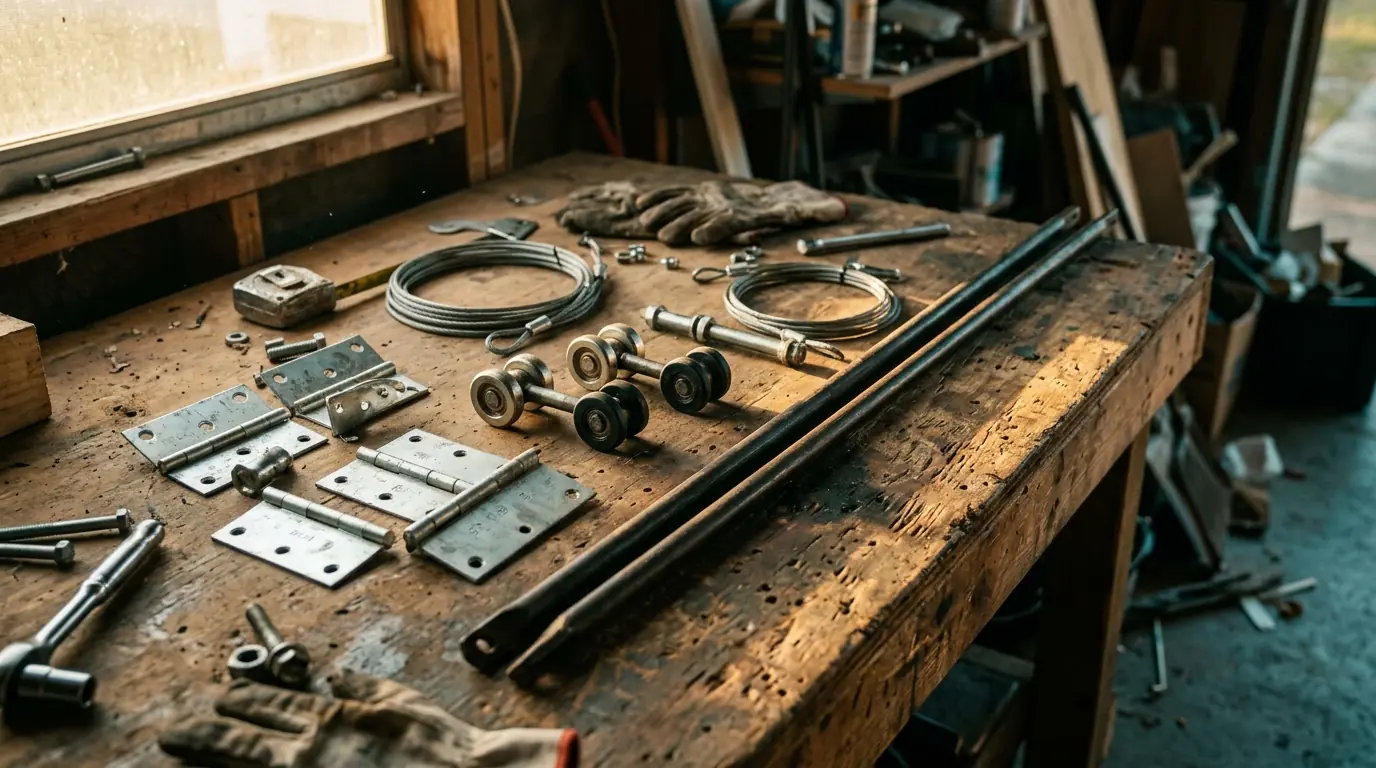
Bare steel rollers rust and stop rolling, and hinges seize at the pin. Sealed nylon rollers resist this better. Tracks are galvanized but still rust at the bottom where water sits, and a rusted, rough track wears rollers faster.
Lubricate rollers and hinges, but keep grease out of the tracks; it traps grit.
Habits that slow rust down
Keep the bottom seal in good shape so rainwater stays out. Sweep standing water and debris away from the door after storms. Lubricate hinges, roller bearings and spring coils with a garage-door lubricant two or three times a year. Look at the cables and bottom brackets when you do.
A yearly tune-up covers all of this, plus the balance and safety tests.
When rust means call now
Call if a cable has broken strands, a bottom bracket is flaking or bent, a spring shows a gap, or the door lifts crooked. Stop using the door until it has been checked. Those parts carry the spring's full load, and they fail suddenly.
Questions readers ask
Garage door rust questions
Houston's humidity keeps bare steel damp for hours each day, especially at floor level.
Rust pits the spring wire and makes it more likely to break. Have it checked.
No. The cables are under spring tension. Have rusted cables replaced.
Hinges, roller bearings and spring coils, with a garage-door lubricant. Not the tracks.
The nylon wheel does not, and sealed bearings resist rust better than open steel ones.
A few times a year, and after any storm or flood.